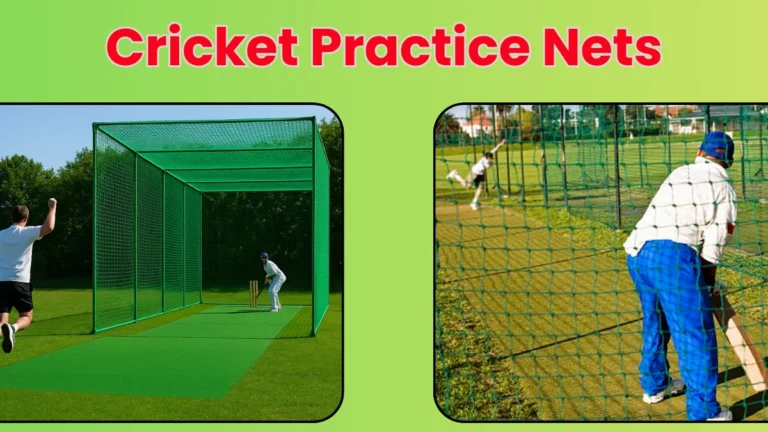
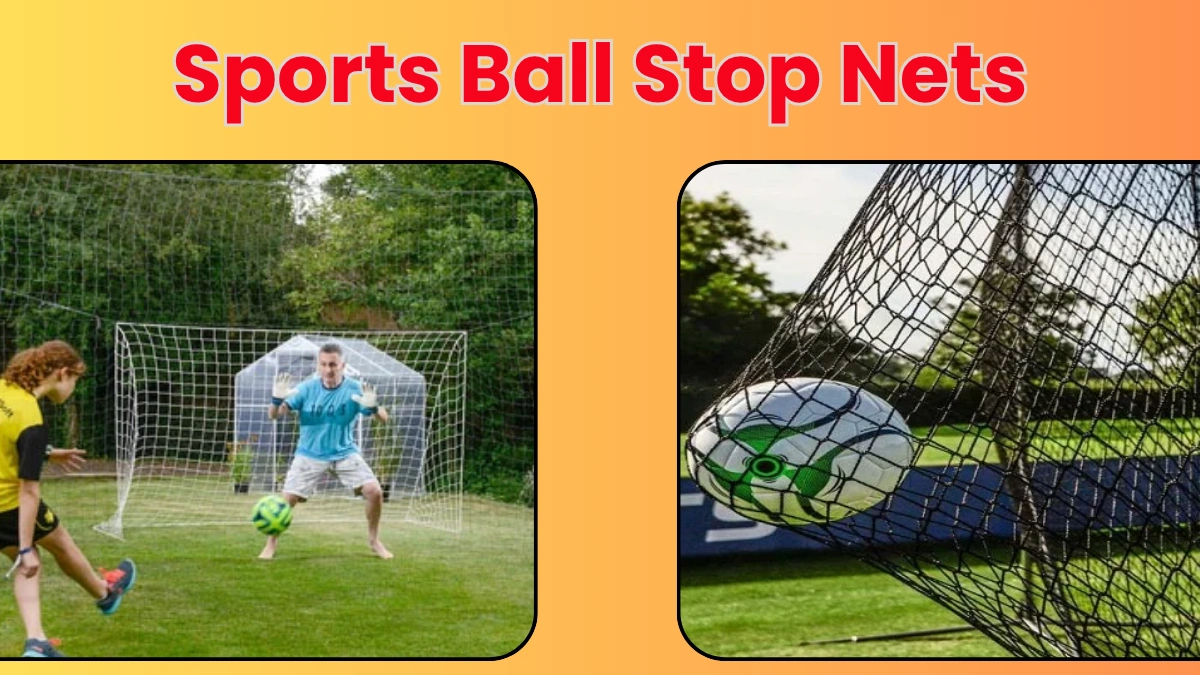

Sports facilities, school playgrounds, academies and stadiums require reliable protection to ensure that high-speed balls do not leave the play area and cause injuries or property damage. Sports Ball Stop Nets have become an essential part of sports infrastructure in India, offering safety, boundary control and training efficiency. These nets are engineered using durable HDPE or Nylon materials that can withstand powerful ball impact, UV exposure and constant outdoor usage.
Whether used for cricket, football, tennis, volleyball or multi-sports arenas, ball stop nets ensure that balls remain within the playing zone, allowing smooth practice sessions. With the growth of sports training academies and turf grounds across India, the demand for high-quality ball stop netting has increased significantly in 2025.
What Are Sports Ball Stop Nets
Sports Ball Stop Nets are heavy-duty safety nets installed around sports grounds to prevent balls from escaping the boundary. They are designed to contain fast-moving balls and protect players, spectators and surrounding property. These nets are used in both indoor and outdoor sports facilities and are available in different mesh sizes depending on the sport.
These nets are suitable for cricket training grounds, football turfs, tennis courts, school playgrounds, community parks, rooftop sports setups and multi-purpose indoor arenas. Their flexibility, durability and visibility make them a preferred choice for safety and professional sports infrastructure.
Why Sports Ball Stop Nets Are Important
Sports games involve powerful shots, fast bowlers, high-speed kicks and unpredictable ball movement. Without proper boundary nets, balls can easily enter public roads, nearby buildings or crowds, increasing the risk of injuries and damage. Sports Ball Stop Nets reduce these risks and create a controlled environment where training can continue without interruption.
| Problem Without Nets | Safety Risk | Benefit of Ball Stop Nets |
|---|---|---|
| Balls escaping the ground | Injury to people or property damage | Contains balls within the boundary |
| Lost training time | Frequent breaks to collect balls | Continuous practice without delays |
| Unsafe surroundings | Risk for pedestrians and vehicles | Creates a protected sports zone |
| Limited use of space | Difficulty practicing in small areas | Expands usable training area |
Ball stop nets improve safety, performance and efficiency for all sports facilities.
Types of Sports Ball Stop Nets
Different sports require nets with specific mesh thickness, strength and impact resistance. Below are the main categories:
| Net Type | Material | Best Use |
|---|---|---|
| HDPE Sports Nets | UV-resistant HDPE | Cricket, football, tennis |
| Nylon Ball Stop Nets | High-impact Nylon | Indoor sports, baseball, cricket |
| Knotless Sports Nets | Polypropylene knotless mesh | Badminton, tennis |
| Cricket Ball Stop Nets | Heavy mesh for hard ball cricket | Cricket academies |
| Football Ball Stop Nets | Larger mesh for football shots | Football turfs and grounds |
| Multi-Sport Boundary Nets | Combined mesh structures | School grounds and community areas |
| Golf Ball Stop Nets | Fine mesh for high-speed golf balls | Golf practice ranges |
These options ensure complete safety that aligns with the requirements of each sport.
Key Features of Sports Ball Stop Nets
Sports ball stop nets are designed to deliver long-lasting performance under high-impact conditions. They are made with UV-treated HDPE or braided Nylon to handle sunlight, heavy rains and continuous ball strikes. The nets maintain their strength and shape over time. They allow clear visibility for spectators and players while protecting the boundary. They are lightweight yet strong enough to stop high-speed balls. They are available in multiple thicknesses and mesh sizes to accommodate different sports requirements. They include rust-proof hooks, clamps and ropes for secure installation.
Technical Specifications
| Specification | Detail | Advantage |
|---|---|---|
| Material | HDPE, Nylon or PP | Offers strength and flexibility |
| Mesh Size | 20 mm to 100 mm | Suitable for different sports |
| Twine Thickness | 1.5 mm to 4 mm | Handles high-impact shots |
| UV Stabilization | Yes | Withstands harsh weather |
| Colors | Green, Black, White | High visibility |
| Lifespan | 5 to 8 years | Durable for long-term use |
| Installation | Poles, clamps, hooks | Stable and secure setup |
These specifications help choose the correct net for specific sports and training requirements.
Installation Process of Sports Ball Stop Nets
A proper installation ensures long-lasting safety and reliable performance. The process begins with a site inspection to measure boundary size, height and required coverage. Steel or GI poles are erected at regular intervals for structural support. The nets are mounted using strong UV-resistant ropes, hooks and clamps. The final step includes adjusting tension to prevent sagging and checking for gaps or weak areas. When installed correctly, the nets remain stable during strong winds and heavy ball impact.
Applications of Sports Ball Stop Nets in India
Sports Ball Stop Nets are used across multiple environments, including cricket practice nets, football training turfs, futsal courts, school sports grounds, multi-sport arenas, rooftop courts, tennis courts, indoor stadiums, community parks and residential playgrounds. They are also essential for sports academies and professional coaching centers that require high-quality boundary control.
Benefits of Sports Ball Stop Nets
Sports ball stop nets help maintain safety around sports fields by stopping balls from entering public areas. They prevent damage to windows, vehicles and buildings near the playing zone. They reduce the time wasted in retrieving balls, allowing players to focus on training. They make small grounds more functional by keeping balls within a defined space. They help create a professional practice environment for schools, academies and turfs. With low maintenance and strong durability, they provide long-term value to sports infrastructure.
Sports Ball Stop Nets vs Traditional Fencing
| Feature | Ball Stop Nets | Traditional Fencing |
|---|---|---|
| Flexibility | Highly adaptable | Limited |
| Impact Absorption | Strong | Very low |
| Cost Efficiency | Affordable for large areas | Expensive |
| Appearance | Cleaner and more open | Bulkier |
| Wind Resistance | Good airflow | Blocks air flow |
Ball stop nets offer better impact resistance and are easier to install compared to metal or wooden fences.
Sports Ball Stop Nets Price in India
The cost of sports ball stop nets depends on material type, thickness, mesh size, installation height and total coverage area. The standard price range in India is ₹12 to ₹40 per sq.ft including installation. HDPE nets are cost-effective, while Nylon offers premium durability for professional sports setups.
Conclusion: Sports Ball Stop Nets have become an essential requirement for modern sports grounds in India. They provide strong protection, ensure controlled gameplay and protect people and property around the field. Built with HDPE, Nylon or PP, these nets withstand constant impact, harsh weather and long-term outdoor conditions. They are suitable for cricket, football, tennis, multi-sports and indoor arenas. With proper installation and minimal maintenance, these nets deliver reliable performance for years, making them a valuable investment for schools, academies, stadiums and community grounds in 2025