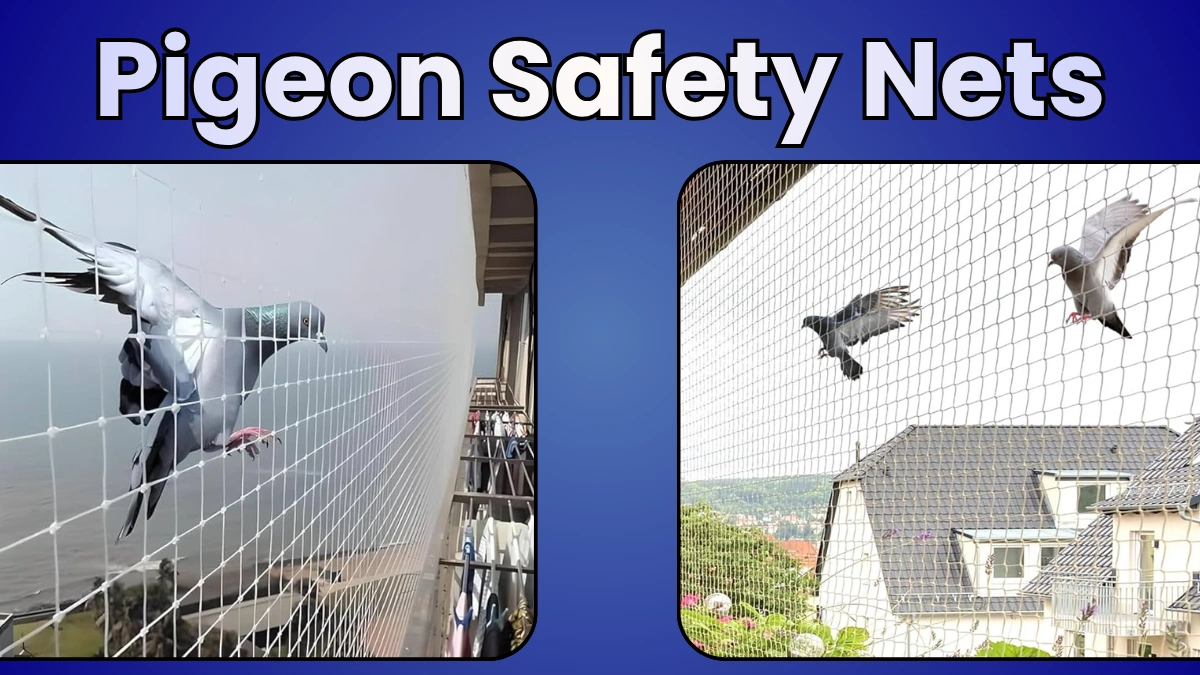

Pigeons are a common sight in cities, but they can quickly turn into a major nuisance for homeowners and businesses. Their droppings, feathers, and nesting habits lead to hygiene problems, structural damage, and unpleasant odors.
Installing pigeon nets also known as anti bird nets or pigeon protection nets is one of the most effective, long-lasting, and eco-friendly ways to solve this issue.
In this detailed guide, you’ll learn everything about pigeon nets, including their benefits, types, materials, installation methods, maintenance tips, and cost comparison.
What Are Pigeon Nets?
A pigeon net is a fine, durable mesh installed across open areas like balconies, ducts, terraces, and rooftops to block pigeons from entering or nesting.
Unlike spikes or chemical repellents, pigeon nets act as a physical yet non-harmful barrier. They are made from nylon or HDPE (High-Density Polyethylene), materials known for being UV stabilized, lightweight, and weather-resistant.
The main advantage of pigeon nets is that they prevent bird intrusion without affecting air circulation, visibility, or natural light.
Why Are Pigeon Nets Necessary?
Urban apartments, hospitals, and factories often face continuous problems due to pigeons. Here’s why pigeon nets are essential:
- Health Protection: Pigeon droppings contain bacteria and fungi that can transmit diseases like histoplasmosis and salmonella.
- Property Preservation: Droppings are acidic and corrode walls, balconies, and AC units.
- Clean Environment: Prevent feathers and waste accumulation on ledges, ducts, and drainage areas.
- Low Maintenance: Once installed, nets require minimal upkeep and protect for years.
- Eco-Friendly: Nets offer a bird-safe, non-injurious, and humane solution.
Types of Pigeon Nets
Different pigeon nets are designed to meet various needs, based on size, color, and material quality. Below is a comparison table:
| Type | Material Used | Best For | Durability | Approx. Cost (per sq.ft.) |
|---|---|---|---|---|
| Nylon Pigeon Net | Virgin Nylon (UV Treated) | Homes, Balconies, Windows | 3–5 Years | ₹10–₹15 |
| HDPE Pigeon Net | High-Density Polyethylene | Industrial Areas, Large Complexes | 4–6 Years | ₹12–₹18 |
| Transparent Monofilament Net | Nylon Monofilament | Premium Apartments | 3–4 Years | ₹15–₹20 |
| Black UV Stabilized Net | HDPE + UV Coating | Outdoor & Dusty Zones | 5–6 Years | ₹14–₹19 |
| Custom Mesh Pigeon Net | Nylon / HDPE | Custom Spaces or Large Balconies | 5+ Years | ₹15–₹25 |
Note: Prices may vary based on brand, mesh size, and installation area.
Key Benefits of Installing Pigeon Nets
1. Complete Bird Protection
Once installed, pigeon nets prevent pigeons and other birds from entering balconies, air ducts, or terraces. This eliminates nesting, droppings, and associated cleaning costs.
2. Hygienic and Safe
Pigeon nets are non-toxic and chemical-free, maintaining a clean and disease-free environment.
3. Maintains Aesthetic Appeal
Transparent or fine-mesh nets are nearly invisible, preserving your balcony’s view and architectural look.
4. Durable and Weatherproof
Made from UV-stabilized nylon or HDPE, these nets withstand extreme sunlight, wind, and rain without tearing or discoloring.
5. Cost-Effective Solution
Unlike repeated cleaning or pest control, pigeon nets offer long-term protection with minimal maintenance costs.
How to Choose the Right Pigeon Net
Selecting the best pigeon net depends on material quality, mesh design, and installation quality.
Here’s a quick guide to help you decide:
| Factor | Recommended Option | Why It’s Important |
|---|---|---|
| Material Type | UV-Stabilized Nylon / HDPE | Weatherproof and long-lasting |
| Mesh Size | 25mm – 50mm | Prevents pigeon entry without blocking airflow |
| Color Options | Transparent, White, or Black | Matches balcony design and visibility |
| Thickness | 1.5mm – 3mm | Higher thickness = stronger net |
| Installation | Professional Service | Ensures correct tension and fit |
| Warranty | Minimum 3 Years | Indicates product reliability |
For apartments and residential use, transparent monofilament pigeon nets are the most popular choice due to their neat appearance and effective protection.
Installation Process of Pigeon Nets
Installing pigeon nets professionally ensures proper coverage and safety. Below are the typical steps:
Step 1: Site Inspection
Experts inspect the balcony or terrace to measure the area and identify anchoring points.
Step 2: Net Selection
Based on the structure and exposure, a suitable net type and mesh size are recommended.
Step 3: Fixing and Tensioning
The net is fixed using stainless steel hooks, nylon cords, and anchor fasteners. Proper tension prevents sagging or gaps.
Step 4: Quality Testing
The installer checks the entire area for firm grip, correct alignment, and secure attachment.
Maintenance Tips for Pigeon Nets
Although pigeon nets require little maintenance, regular care extends their life:
- Wash the net every 3–4 months with mild detergent and water.
- Inspect hooks and cords yearly for rust or loosening.
- Avoid cutting or placing sharp tools near the mesh.
- Trim plants or branches touching the net.
- Replace sections showing UV fading or fraying.
Well-maintained nets can last up to 5 years or more without replacement.
Common Myths About Pigeon Nets
Myth 1: “Pigeon nets hurt birds.”
Fact: They simply block entry and do not trap or injure birds.
Myth 2: “Nets block sunlight or ventilation.”
Fact: High-quality transparent nets allow air and light freely.
Myth 3: “Pigeon nets are expensive.”
Fact: They are one of the most economical long-term bird-control solutions.
Myth 4: “Any plastic mesh can be used.”
Fact: Only UV-stabilized, purpose-built pigeon nets offer safety and longevity.
Applications of Pigeon Nets
Pigeon nets can be used in multiple settings:
- Residential Buildings: Balconies, windows, and terraces
- Commercial Properties: Hospitals, hotels, and schools
- Industrial Sites: Warehouses, factories, and sheds
- Public Structures: Airports, malls, bridges, and bus terminals
Their flexibility and strength make them suitable for any open structure that attracts birds.
Pigeon Nets vs Other Bird Control Methods
| Control Method | Effectiveness | Lifespan | Maintenance | Eco-Friendly |
|---|---|---|---|---|
| Chemical Repellents | Temporary | 2–3 Months | High | ❌ No |
| Ultrasonic Devices | Limited | 6–12 Months | Medium | ✅ Yes |
| Bird Spikes | Moderate | 2–3 Years | Medium | ✅ Yes |
| Pigeon Nets | High (100%) | 3–5 Years | Low | ✅ Yes |
Clearly, pigeon nets provide the most reliable and sustainable bird-control solution available today.
Advantages of Professional Pigeon Net Installation
- Accurate Measurement: Ensures full coverage without gaps.
- Proper Anchoring: Stainless fittings provide long-term stability.
- Aesthetic Fit: Customized to match balcony design.
- Warranty Support: Professional installers often provide product and service warranty.
- Time-Efficient: Installation completed in a few hours with no damage to property.
Conclusion: Installing pigeon nets is the most effective, permanent, and eco-friendly way to keep your home or business bird-free.
These nets are safe, affordable, and long-lasting offering protection from droppings, damage, and disease while maintaining the natural look of your surroundings.
Whether you need pigeon nets for balconies, duct areas, or industrial use, always choose UV-treated, professionally installed nets for the best results.
With proper maintenance, you can enjoy a cleaner, safer, and pigeon-free environment for years to come.
Description: Learn everything about pigeon nets types, materials, installation process, and pricing. Find the best pigeon protection nets for homes, apartments, and commercial buildings.