
In today’s urban living, high-rise apartments and commercial complexes feature open balconies and grill structures that often expose residents to potential risks.
Children, pets, or even household items can accidentally slip through the gaps in the balcony grills. Birds, especially pigeons, may also nest in those grills, causing hygiene issues.
To overcome these challenges, Grill Balcony Safety Nets are an excellent choice. They are durable, cost-effective, and blend seamlessly with your home’s aesthetics — offering total protection without blocking ventilation or sunlight.
This detailed guide covers everything you need to know about grill balcony safety nets, including types, benefits, installation, pricing, and maintenance.
What Are Grill Balcony Safety Nets?
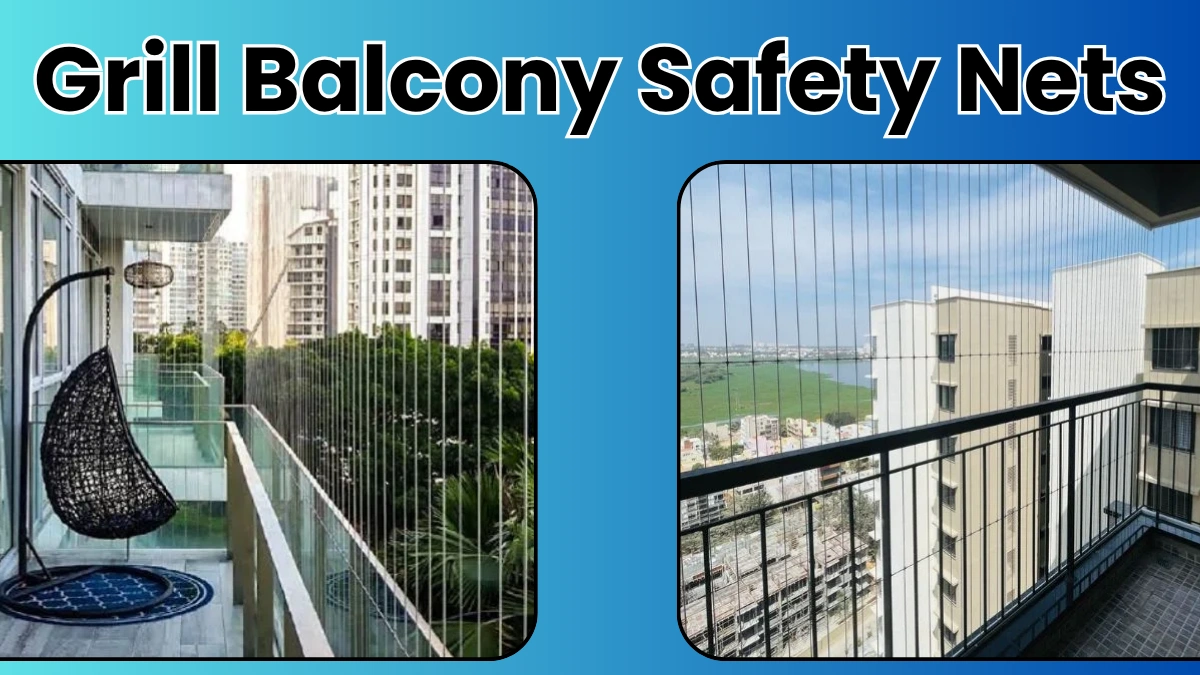
Grill Balcony Safety Nets are protective mesh barriers made from UV-stabilized nylon or HDPE (High-Density Polyethylene).
These nets are fixed along the inner or outer side of balcony grills to prevent falls, stop birds from nesting, and protect children and pets.
The nets are:
- Lightweight but highly durable
- Weatherproof and long-lasting
- Transparent and aesthetic
- Harmless to birds and animals
Their main goal is to provide safety and cleanliness without altering the architectural look of the building.
Why Grill Balcony Safety Nets Are Important
Even with balcony grills, there are risks of small gaps and open spaces. Pets, birds, or children can still get injured. Installing grill balcony safety nets ensures safety, hygiene, and peace of mind.
| Common Problem | How Grill Balcony Safety Nets Help |
|---|---|
| Pigeons nesting on grills | Prevent birds from entering and nesting |
| Children’s safety risk | Acts as a protective shield |
| Pets escaping or falling | Keeps pets secure and confined |
| Dropping of household items | Prevents accidental falls from height |
| Dust and debris accumulation | Adds a light barrier to outdoor pollutants |
Result: A secure, hygienic, and peaceful living space for your family.
Types of Grill Balcony Safety Nets
The choice of net depends on your balcony type, environmental exposure, and preferred durability.
Here’s a detailed comparison:
| Type of Net | Material Used | Ideal For | Durability | Average Cost (per sq.ft.) |
|---|---|---|---|---|
| Nylon Safety Net | Virgin UV-Treated Nylon | Residential Apartments | 3–5 Years | ₹10–₹15 |
| HDPE Safety Net | High-Density Polyethylene | Industrial and Outdoor Use | 4–6 Years | ₹12–₹18 |
| Transparent Monofilament Net | Nylon Monofilament | Premium Apartments | 3–4 Years | ₹15–₹20 |
| Black UV-Coated Net | HDPE + UV Layer | Dusty and Sunny Locations | 5–6 Years | ₹14–₹19 |
| Customized Heavy-Duty Net | Nylon/HDPE Thick Mesh | Commercial Buildings | 5+ Years | ₹15–₹25 |
Pro Tip: Transparent nylon nets are the best choice for apartments, as they provide safety without affecting balcony appearance.
Benefits of Installing Grill Balcony Safety Nets
1. Complete Safety for Kids and Pets
The nets act as a strong barrier around grills, preventing children or pets from sticking their heads or falling through gaps.
2. Stops Pigeons and Birds
Birds often sit or nest on balcony grills. The nets keep them out, reducing droppings, smell, and disease risks.
3. Improves Hygiene
No more bird droppings, feathers, or nests — ensuring a cleaner and healthier environment.
4. Maintains Natural Ventilation
The nets allow air and light to pass freely, so you can enjoy an open view without compromising safety.
5. Weatherproof and Durable
Made with UV-protected nylon or HDPE, the nets resist harsh sunlight, wind, and rain for years.
6. Affordable and Low Maintenance
Installation is quick, inexpensive, and requires little upkeep over time.
Technical Specifications of Grill Balcony Safety Nets
| Feature | Specification | Purpose / Benefit |
|---|---|---|
| Material | Nylon / HDPE (UV Stabilized) | Ensures flexibility and strength |
| Mesh Size | 25mm – 50mm | Blocks pigeons and small objects |
| Tensile Strength | 100–150 kg/m² | Withstands pressure and movement |
| UV Protection | Yes | Prevents discoloration and damage |
| Color Options | Transparent / White / Black | Matches any building style |
| Installation Type | Stainless Steel Hooks & Nylon Cords | Rust-free and secure fixing |
| Warranty | 3–5 Years | Long-lasting performance assurance |
Grill Balcony Safety Net Installation Process
Professional installation ensures maximum safety, aesthetics, and durability.
Here’s how it’s typically done:
Step 1: Site Inspection
Technicians visit to measure the balcony area and identify suitable anchor points on the grill.
Step 2: Material Selection
Based on balcony design, exposure, and requirements, the right net type and color are chosen.
Step 3: Fitting the Anchors
Stainless steel hooks are drilled or clamped around the grill frame.
Step 4: Net Fixing
The net is tied with strong nylon ropes, stretched evenly, and checked for tightness.
Step 5: Final Testing
After installation, technicians test for tension, gaps, and coverage to ensure complete safety.
The entire process takes 1–2 hours depending on balcony size.
Maintenance and Cleaning Tips
To ensure your grill balcony safety nets last longer, follow these simple maintenance steps:
- Clean with water or mild soap every 3–4 months
- Check hooks annually for corrosion
- Keep sharp objects away from the net
- Trim plants or trees touching the net
- Replace damaged or sagging sections immediately
With proper care, these nets can last up to 5 years or more.
Grill Balcony Safety Nets vs Other Balcony Protection Methods
| Method | Safety Level | Visibility | Maintenance | Cost | Ideal Use |
|---|---|---|---|---|---|
| Metal Grills | High | Medium | Low | High | Standard Balconies |
| Glass Panels | High | High | High | Very High | Luxury Apartments |
| Grill Balcony Safety Nets | High | High | Low | Low | All Balconies |
Conclusion:
Grill balcony safety nets offer the best balance of protection, cost, and visual appeal among all balcony safety options.
Applications of Grill Balcony Safety Nets
These nets can be installed across various properties for versatile protection:
- Residential Apartments: For children and pet safety
- Villas and Houses: Prevent birds and insects from entering
- Commercial Buildings: Maintain hygiene and avoid bird nuisance
- Hospitals and Schools: Ensure safety in open corridors
- Industrial Areas: Prevent falling debris or materials
They are suitable for all types of grills and open balconies.
Common Myths About Grill Balcony Safety Nets
Myth 1: “Safety nets spoil balcony aesthetics.”
➡ Fact: Transparent nets are nearly invisible and blend with your grill design.
Myth 2: “They block air and light.”
➡ Fact: These nets are fully breathable and allow natural sunlight.
Myth 3: “They are costly.”
➡ Fact: Installation starts as low as ₹10 per sq.ft., making it highly affordable.
Myth 4: “They harm birds.”
➡ Fact: The nets are non-harmful — they simply block entry without trapping birds.
Frequently Asked Questions (FAQs)
Q1. How much does a grill balcony safety net cost?
Prices range from ₹10–₹20 per sq.ft., depending on material and area size.
Q2. How long does installation take?
It usually takes 1–2 hours for an average-sized balcony.
Q3. Do these nets last long?
Yes. With UV protection and minimal care, they last 3–5 years or more.
Q4. Are they suitable for all types of grills?
Yes. They can be installed on metal, concrete, or wood grills using proper fittings.
Q5. Do they affect balcony appearance?
No. Transparent nets retain your balcony’s open look while adding safety.
Conclusion: Installing Grill Balcony Safety Nets is a simple yet effective way to ensure your home’s safety and cleanliness.
They provide complete protection against pigeon invasion, accidental falls, and pet hazards — while keeping your balcony airy and beautiful.
Made from UV-stabilized nylon or HDPE, these nets are durable, transparent, and weather-resistant — making them the ideal safety solution for every household.
For the best results, always choose professional installation for strong anchoring, long life, and a flawless finish.
Description: Learn all about grill balcony safety nets — types, installation process, materials, and cost. Protect your home from pigeons, accidents, and dust with durable nylon and HDPE nets.