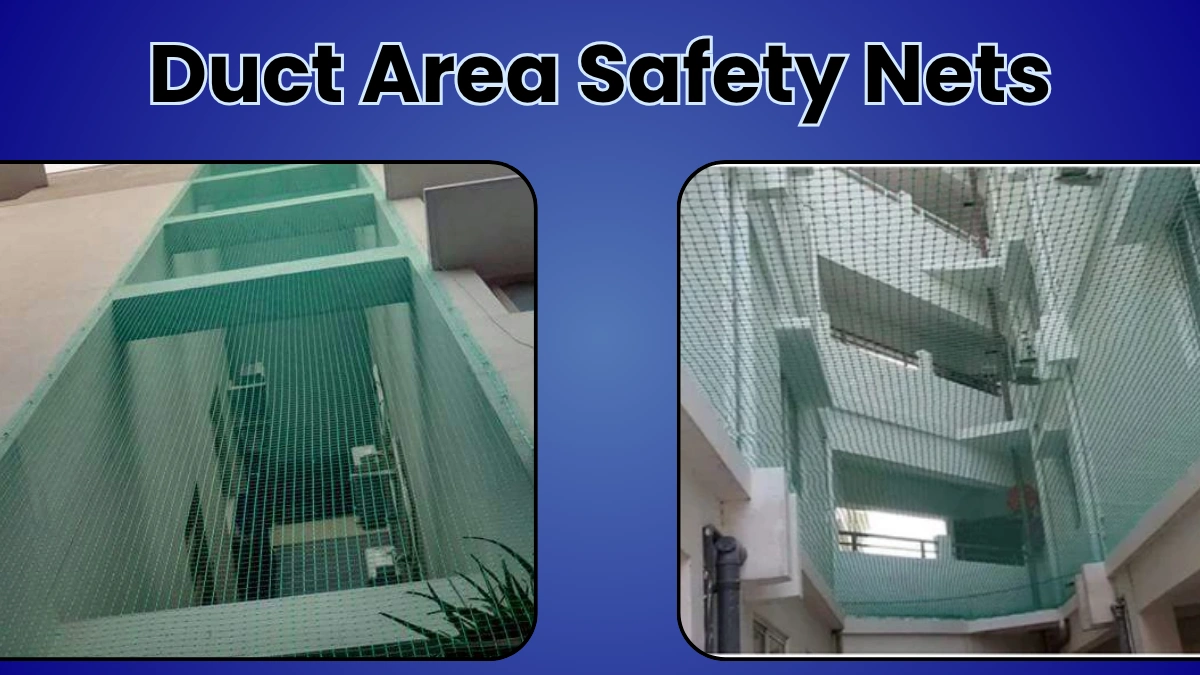

In high-rise apartments and commercial buildings, the duct area provides essential ventilation and light. However, these open vertical shafts often become breeding spaces for pigeons, dust, and debris, causing hygiene and safety issues. The best preventive measure is to install Duct Area Safety Nets, designed to protect ducts from birds, falling objects, and pollution without blocking airflow.
This guide explains everything about duct safety nets their importance, types, materials, benefits, installation process, and cost in India.
What Are Duct Area Safety Nets
Duct Area Safety Nets are durable and UV-stabilized protective nets made from nylon or HDPE (High-Density Polyethylene). These nets are installed in open shaft areas or between building blocks to prevent birds, litter, or tools from entering the space.
The nets are light, strong, and resistant to extreme weather. They allow natural light and air to pass through while maintaining a safe and hygienic environment. Duct safety nets are now standard installations in modern apartment complexes, hotels, malls, and offices.
Importance of Duct Area Safety Nets
Open ducts without protection quickly attract birds and collect garbage. This leads to foul smells, blocked ventilation, and safety hazards. Installing a net provides permanent prevention.
| Common Problem | Effect Without Duct Net | Benefit After Installing Duct Net |
|---|---|---|
| Bird nesting and droppings | Unpleasant smell, stains, and clogging | Keeps ducts clean and bird-free |
| Falling debris or tools | Risk of injury or property damage | Blocks accidental falls |
| Garbage accumulation | Requires frequent cleaning | Prevents entry of waste |
| Poor ventilation | Airflow obstruction and moisture | Maintains continuous air circulation |
| Difficult maintenance | Unsafe cleaning operations | Reduces maintenance effort and cost |
Duct area nets provide a reliable barrier while ensuring open and healthy air movement in vertical shafts.
Types of Duct Area Safety Nets
The type of duct net depends on purpose, material, and durability requirements. Below is a detailed comparison of the most common variants available in India.
| Type of Net | Material | Suitable For | Durability | Average Cost (per sq.ft.) |
|---|---|---|---|---|
| Nylon Duct Net | UV-Stabilized Nylon | Residential apartments | 3–5 Years | ₹10–₹15 |
| HDPE Duct Net | High-Density Polyethylene | Commercial & industrial ducts | 5–7 Years | ₹12–₹18 |
| Transparent Monofilament Net | Nylon Fiber | Premium apartments | 3–4 Years | ₹15–₹20 |
| Pigeon Control Duct Net | Fine HDPE Mesh | Pigeon-affected areas | 4–6 Years | ₹12–₹17 |
| Heavy-Duty Reinforced Net | Double-Layer HDPE | Large commercial structures | 6–8 Years | ₹15–₹25 |
HDPE safety nets are preferred for long-term applications because they resist sunlight, wind, and moisture, making them suitable for Indian weather conditions.
Key Benefits of Duct Area Safety Nets
- Prevents Birds and Debris – Stops pigeons, crows, and other birds from nesting or contaminating duct spaces.
- Improves Building Hygiene – Keeps the duct clean, odor-free, and safe for ventilation.
- Reduces Maintenance Cost – Eliminates the need for frequent cleaning or bird waste removal.
- Ensures Safety – Prevents accidental falls of tools or objects from upper floors.
- Allows Ventilation – The mesh design maintains full air and light flow.
- Durable and Weather Resistant – UV-protected nets last up to eight years with minimal maintenance.
- Maintains Building Appearance – Transparent nets blend with walls and do not spoil the design.
Technical Specifications
| Specification | Details | Advantage |
|---|---|---|
| Material Type | HDPE / Nylon (UV-treated) | High strength and flexibility |
| Mesh Size | 25mm–50mm | Prevents bird entry and debris |
| Tensile Strength | 80–120 kg/m² | Can withstand strong wind load |
| UV Protection | Yes | Long-term resistance to sunlight |
| Installation Method | Stainless Steel Hooks & Nylon Ropes | Rust-free and secure |
| Color Options | White, Transparent, Green | Matches building exteriors |
| Lifespan | 5–8 Years | Long-lasting protection |
| Maintenance | Very Low | Easy to clean and inspect |
Installation Process
Professional installation is essential for full safety and coverage. The process involves:
- Site Inspection: The technician inspects duct openings, height, and structure to determine the best fitting points.
- Measurement: Accurate measurements are taken to prepare a net that fits perfectly.
- Fixing Anchors: Stainless-steel hooks or clamps are fixed around the edges.
- Net Fitting: The net is secured using nylon ropes, ensuring tight tension and no loose edges.
- Quality Check: The team verifies net strength, alignment, and safety after installation.
Typical installation time: 1–3 hours, depending on duct height and size.
Maintenance Tips
To maintain effectiveness and extend lifespan:
- Clean the net twice a year with mild soap and water.
- Inspect anchors and ropes annually.
- Replace damaged or sagging portions immediately.
- Avoid using sharp tools or hanging heavy objects on the net.
- Trim nearby branches that may touch the net.
Regular inspection ensures long-term durability and consistent protection.
Comparison: Duct Safety Nets vs Other Protection Methods
| Method | Effectiveness | Durability | Maintenance | Eco-Friendly | Cost |
|---|---|---|---|---|---|
| Bird Repellent Gel | Low | 2–3 Months | High | No | Moderate |
| Wire Mesh Grill | Moderate | 3–5 Years | Medium | Yes | High |
| Bird Spikes | High | 5–8 Years | Low | Yes | Medium |
| Duct Safety Nets | Very High (95–100%) | 5–8 Years | Low | Yes | Low |
Duct safety nets provide maximum protection at a low cost, making them ideal for both residential and commercial properties.
Applications of Duct Safety Nets
Duct nets are widely used in:
- Apartment buildings and residential complexes
- Commercial towers and malls
- Hospitals and hotels
- Industrial plants and factories
- Educational institutions
They are suitable for all open shafts, air vents, stairwell gaps, and between-building ducts. Custom sizes can be made to fit any height or shape.
Myths and Facts About Duct Nets
Myth: Duct nets block ventilation.
Fact: The mesh is breathable and allows full airflow and sunlight.
Myth: Nets ruin the building look.
Fact: Transparent nets are almost invisible from a distance.
Myth: Installation is complex and expensive.
Fact: Professional installation is quick and costs between ₹10 and ₹25 per sq.ft., depending on material and area.
Myth: Nets harm birds.
Fact: They are safe, humane, and designed only to deter entry.
Frequently Asked Questions
1. What is the lifespan of a duct safety net?
High-quality HDPE nets last five to eight years with minimal maintenance.
2. Can these nets be used in high-rise apartments?
Yes. They are lightweight yet strong, suitable for tall buildings.
3. Do duct nets stop pigeons completely?
Yes. The fine mesh prevents all medium-sized birds from entering.
4. How much does installation cost?
Average cost ranges from ₹10 to ₹25 per square foot, based on size and material.
5. Does it affect ventilation or natural light?
No. The nets are designed to maintain airflow and brightness.
Conclusion: Duct Area Safety Nets are an essential installation for modern buildings. They protect ducts from birds, dust, and accidental falls while maintaining ventilation and cleanliness. Manufactured from UV-stabilized nylon or HDPE, these nets are durable, weather-resistant, and long-lasting.
Installing duct safety nets ensures a cleaner and safer environment, reduces maintenance costs, and preserves building aesthetics. For best performance, always choose professional installation and high-grade materials designed for Indian weather conditions.
Description: Learn about duct area safety nets for apartments and commercial buildings. Find information on types, materials, benefits, installation process, and prices of HDPE and nylon duct nets in India.