
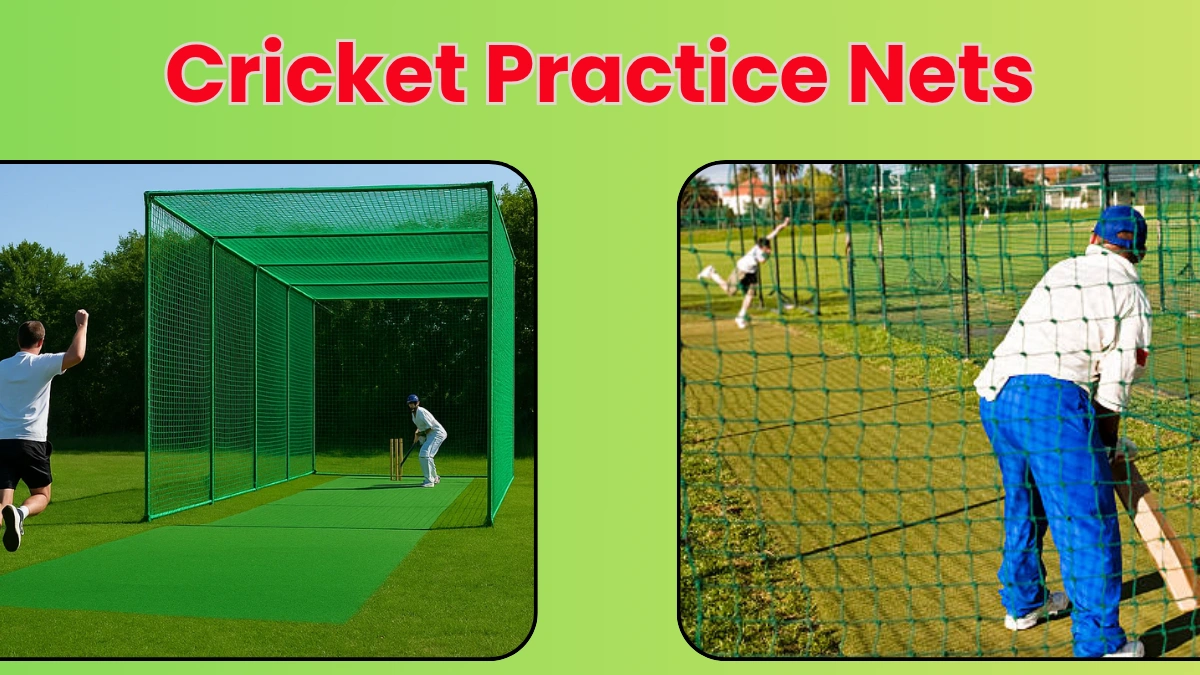

Cricket remains one of the most widely played sports in India, and consistent practice is essential for developing batting, bowling, and fielding skills. An effective way to create a safe and controlled training environment is by installing Cricket Practice Nets. These nets allow players to practice with confidence, improve technique, and maintain discipline during training sessions.
Cricket practice nets are used by academies, schools, professional coaches, clubs, stadiums, and even by individuals looking to build a home training setup. Designed with durable HDPE or Nylon mesh, these nets ensure maximum safety by containing the cricket ball within the practice lane and preventing injuries or property damage.
What Are Cricket Practice Nets?
Cricket Practice Nets are high-strength mesh nets installed around a dedicated cricket practice area to create a closed training space. They are made from HDPE (High-Density Polyethylene) or braided Nylon, both known for their durability, impact resistance, and outdoor performance.
These nets are suitable for indoor and outdoor training and can be customized to match any available space. Cricket nets help cricketers practice continuously without interruptions and maintain safety for players and spectators around the practice zone.
Why Cricket Practice Nets Are Important
Cricket practice involves fast-moving balls, high-intensity drills, and repetitive training. Without proper nets, training becomes unsafe and inefficient.
| Problem | Risk Without Practice Nets | Advantage With Cricket Practice Nets |
|---|---|---|
| Ball going outside | Injury or property damage | Contains all balls securely |
| Limited repetition | Slower skill development | Helps consistent practice |
| Unsafe environment | Uncontrolled shots | Safe and focused training |
| Space restrictions | Requires large open area | Makes small areas usable |
Cricket practice nets help create a controlled training environment where players can focus on skill improvement.
Types of Cricket Practice Nets in India
Different types of nets are used based on training intensity, location, and durability needs.
| Net Type | Material | Ideal Use | Lifespan | Average Cost (per sq.ft.) |
|---|---|---|---|---|
| HDPE Cricket Nets | UV-Stabilized HDPE | Outdoor grounds, academies | 5–8 Years | ₹12–₹20 |
| Nylon Cricket Nets | Braided Nylon | Indoor and outdoor | 4–6 Years | ₹15–₹25 |
| Polypropylene Knotless Nets | PP Knotless | Professional academies | 4–6 Years | ₹18–₹30 |
| Heavy-Duty Sports Nets | Thick Nylon | Fast-bowling and stadiums | 6–9 Years | ₹20–₹35 |
| UV-Shade Cricket Nets | HDPE with UV Coating | Sun protection for outdoor practice | 5–8 Years | ₹18–₹28 |
HDPE and Nylon are the most commonly used due to their durability, strength, and low maintenance.
Key Benefits of Cricket Practice Nets
1. Creates a Safe Training Environment
The netting prevents cricket balls from going out of the practice area, protecting people and property around the ground.
2. Improves Performance and Consistency
Nets help players practice continuously without retrieving the ball, allowing more time for technique development.
3. Suitable for All Skill Levels
Beginners, intermediate players, and professionals can all benefit from structured training inside cricket nets.
4. Durable and Weather Resistant
High-quality cricket nets endure sunlight, rain, wind, and regular impact from fast deliveries.
5. Customizable to Any Area
Cricket nets can be installed in single-lane or multi-lane layouts depending on space and training requirements.
6. Ideal for Indoor and Outdoor Use
Material options make them suitable for schools, academies, gyms, society grounds, and personal home practice.
Technical Specifications of Cricket Practice Nets
| Specification | Description | Benefit |
|---|---|---|
| Material | HDPE / Nylon / PP Knotless | Strong impact resistance |
| Mesh Size | 25mm – 50mm | Prevents cricket balls escaping |
| UV Protection | Yes | Suitable for outdoor use |
| Rope Thickness | 2mm – 4mm | Handles fast bowling pressure |
| Frame Support | Steel Poles / GI Pipes | Stability for multi-lane nets |
| Color Options | Green, Black, Blue | Good visibility |
| Lifespan | 5–9 Years | Long-term savings |
| Maintenance | Low | Easy to clean and care for |
These specifications ensure high performance during training sessions.
Installation Process for Cricket Practice Nets
A proper installation ensures stability, safety, and durability. The installation includes:
- Site Survey: Measuring the available area and evaluating space for single or multi-lane nets.
- Pole Installation: Fixing strong steel or GI poles to support the nets.
- Net Attachment: Securing nets to poles using ropes and durable clamps.
- Tension Adjustment: Ensuring nets are tight, stable, and sag-free.
- Final Inspection: Checking alignment, strength, and safety before use.
Depending on the area, installation can take 3 to 6 hours.
Maintenance and Care Instructions
Cricket nets require periodic maintenance to maintain performance:
- Clean with water to remove dust and dirt buildup
- Check poles and hooks after heavy winds or rain
- Replace torn sections immediately
- Avoid sharp objects coming into contact with the net
- Prevent dragging the nets on rough surfaces
A well-maintained net setup can last for many years without replacements.
Applications of Cricket Practice Nets
Cricket practice nets are widely used in:
- Cricket academies and coaching centers
- Schools and colleges
- Gymnasiums and indoor sports halls
- Residential societies
- Private home cricket practice setups
- Stadium training areas
- Corporate sports facilities
Their versatility makes them suitable for all levels of cricket coaching and training.
Indoor vs Outdoor Cricket Practice Nets
| Feature | Indoor Nets | Outdoor Nets |
|---|---|---|
| Material | Nylon / PP | HDPE / Nylon |
| Weather Exposure | Minimal | High |
| Mesh Thickness | Moderate | Thick and UV-proof |
| Installation | Ceiling mounts / wall mounts | Steel poles and ground anchors |
| Best Use | Gyms, halls | Grounds, open spaces |
Outdoor nets are built to handle weather and high-speed bowling, while indoor nets prioritize flexibility and ease of installation.
Cost of Cricket Practice Nets in India
The cost depends on material, area size, installation type, and training needs.
Average Cost Range: ₹12 – ₹35 per sq.ft. (including installation)
Price varies based on:
- HDPE or Nylon material
- Mesh size and thickness
- Single lane vs multi-lane setup
- Height and number of poles
- Indoor or outdoor installation
Large academies may require premium nets and reinforced structures.
Conclusion: Cricket Practice Nets are essential for structured, safe, and professional cricket training. They provide a controlled practice environment, improve player consistency, reduce risks, and maximize skill development. Built with durable materials like HDPE and Nylon, these nets are ideal for academies, schools, sports clubs, and even home setups.
With proper installation and minimal maintenance, cricket practice nets give long-term value and help players focus on improving their technique with confidence and safety.