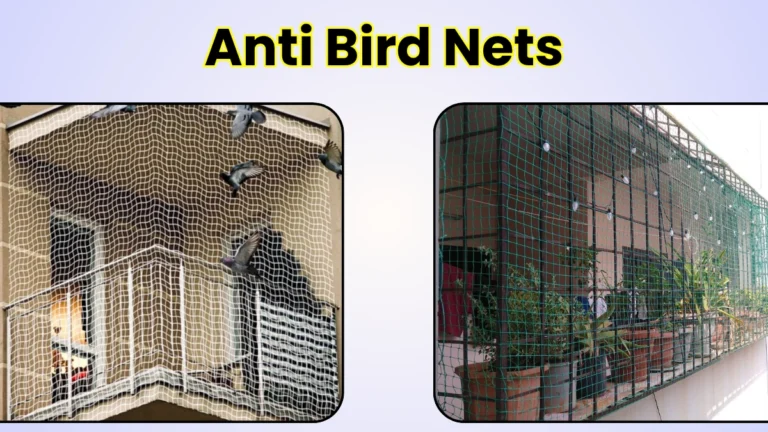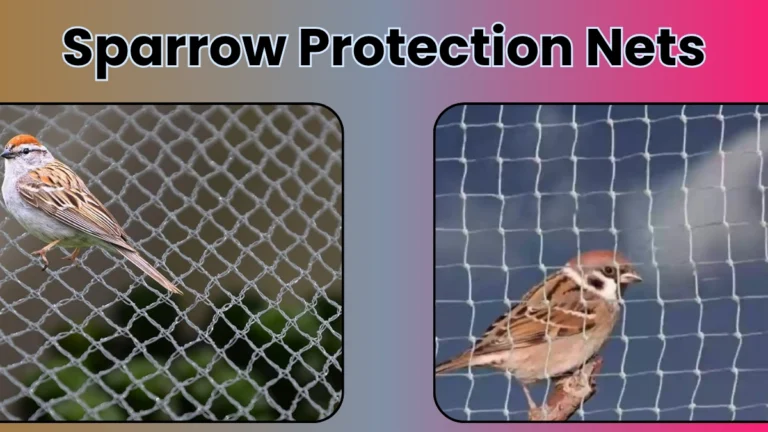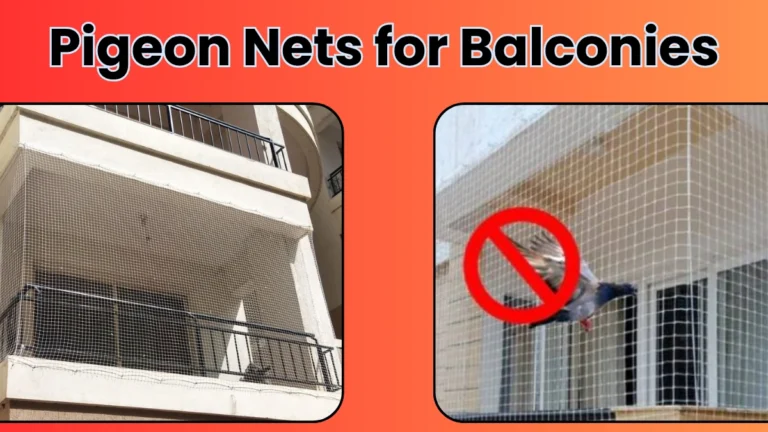
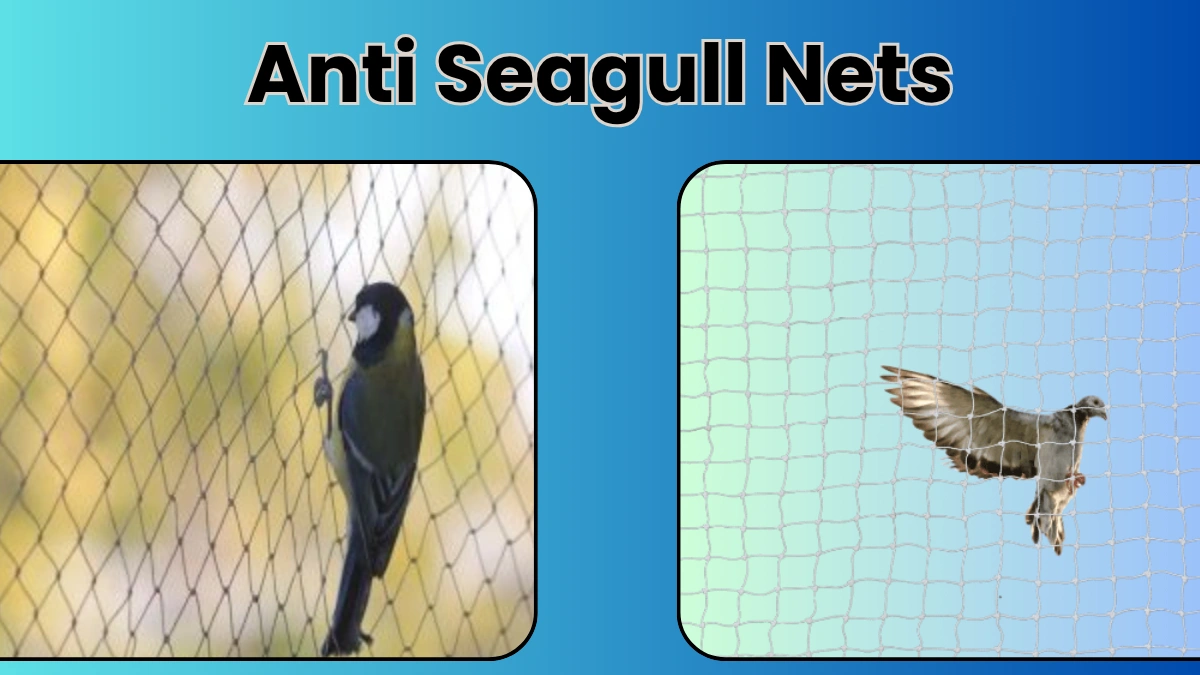

Seagulls are a major concern in coastal regions, ports, beaches, industrial areas, and marine environments. Unlike pigeons, seagulls travel in large groups, create loud noise, scatter food waste, damage rooftops, and leave highly corrosive droppings. Their presence around residential and commercial buildings often leads to hygiene issues, property damage, and maintenance challenges. The most effective long-term solution to prevent seagull landing and nesting is installing Anti Seagull Nets.
These nets are made from durable, UV-stabilized materials and designed specifically to withstand harsh coastal weather conditions. Their strong mesh design restricts seagulls from entering rooftops, terraces, ledges, and industrial zones while maintaining airflow and sunlight.
What Are Anti Seagull Nets?
Anti Seagull Nets are heavy-duty HDPE or braided Nylon safety nets created to stop seagulls from landing, nesting, or occupying rooftops and open structures. These nets are built with larger mesh sizes and stronger threads compared to regular bird nets, making them suitable for larger birds such as seagulls, kites, and coastal birds.
They are widely used across coastal cities, ports, shipyards, food industries, fish markets, hotels, resorts, industrial rooftops, and marine warehouses.
Why Anti Seagull Nets Are Essential
Seagulls create significant problems when they settle on rooftops or near commercial buildings. Their droppings contain strong acids capable of damaging painted surfaces, tiles, metals, and solar panels. Their nesting materials clog drains, while their loud calls cause disturbance throughout the day.
| Problem | Risk Without Seagull Nets | Benefit After Installation |
|---|---|---|
| Droppings on rooftops | Corrosion, stains, bacteria | Prevents landing and contamination |
| Nesting on buildings | Blocked drains, odor, insects | Eliminates nesting activity |
| Noise disturbance | Loud calls and flock gatherings | Reduces seagull presence |
| Food scattering | Garbage spread around site | Maintains hygiene |
| Damage to panels and units | Affects solar panels and AC systems | Protects essential equipment |
| Health hazards | Bacteria and airborne particles | Improves safety and cleanliness |
Installing anti seagull nets ensures a clean, safe, and low-maintenance environment in both residential and industrial areas.
Types of Anti Seagull Nets
Different locations require different net structures based on height, wind exposure, bird density, and application.
| Type of Net | Material | Ideal Use | Durability | Price (per sq.ft.) |
|---|---|---|---|---|
| HDPE Heavy-Duty Net | UV-Stabilized HDPE | Rooftops, open terraces | 5–8 Years | ₹15–₹25 |
| Braided Nylon Net | High-Tensile Nylon | Industrial complexes, shipyards | 4–6 Years | ₹12–₹20 |
| Transparent Monofilament Net | Nylon Mono Thread | Resorts, hotels, glass buildings | 3–5 Years | ₹18–₹30 |
| Coastal Grade Bird Net | Coated HDPE | Ports, warehouses, marine units | 6–10 Years | ₹20–₹35 |
HDPE nets are the most commonly used due to their strength, UV resistance, and durability in coastal environments.
Major Benefits of Anti Seagull Nets
1. Stops Seagull Landing and Nesting
The netting structure acts as a physical barrier, preventing seagulls from landing, nesting, or gathering in large numbers.
2. Protects Rooftops and Structures
Seagull droppings are acidic and can corrode metal surfaces, solar panels, AC units, and building tiles. Nets prevent direct access to these areas.
3. Reduces Noise and Disturbance
By blocking their landing zones, seagulls naturally move away from the protected area, reducing noise pollution.
4. Maintains Hygiene
Prevents contamination caused by food waste, feathers, insects, and bacteria brought by seagulls.
5. Withstands Coastal Weather
UV-stabilized materials resist salt, humidity, sunlight, and wind, ensuring long-term performance in coastal zones.
6. Safe and Humane Method
Anti seagull nets do not harm the birds; they simply block access, ensuring an ethical bird-control solution.
Technical Specifications of Anti Seagull Nets
| Feature | Specification | Advantage |
|---|---|---|
| Material | UV-Protected HDPE / Braided Nylon | High tensile strength |
| Mesh Size | 40mm – 100mm | Suitable for large seagulls |
| Thread Thickness | 1.5mm – 3mm | Enhanced protection |
| UV Resistance | Yes | Ideal for coastal heat and sun |
| Salt Resistance | Yes | Resists corrosion from sea salt |
| Load Capacity | 150–250 kg/m² | Withstands strong winds |
| Installation Hardware | Stainless Steel Hooks & Nylon Cord | Firm anchoring |
| Lifespan | 5–10 Years | Long-term solution |
These specifications ensure the nets remain functional even under harsh coastal conditions.
Installation Process for Anti Seagull Nets
Professional installation is essential for long-lasting results, especially in windy coastal environments.
Step-by-step installation procedure:
- Site Inspection and Analysis: Experts inspect rooftops, ledges, and open structures to identify seagull entry points.
- Accurate Measurements: Custom net sizing ensures perfect coverage.
- Anchor Installation: Stainless steel hooks and clamps are placed around the perimeter.
- Net Fitting and Tensioning: Nets are stretched tightly and secured to avoid sagging.
- Final Safety Check: Technicians inspect the installation to ensure all entry points are fully covered.
For high-rise or industrial installations, additional safety protocols and wind-resistant ropes are used.
Maintenance and Cleaning
Anti seagull nets require minimal maintenance:
- Rinse with water every few months to remove salt deposits or dust.
- Inspect hooks, ropes, and corners once or twice a year.
- Replace damaged sections if exposed to extreme winds or sharp objects.
- Avoid placing heavy equipment directly over the net surface.
With proper care, these nets can last several years without losing strength.
Where Anti Seagull Nets Are Used
Anti seagull nets are widely installed in:
- Residential rooftops and terraces
- Commercial buildings and offices
- Coastal hotels and beach resorts
- Ports, harbors, dockyards, and shipyards
- Fish markets and seafood industries
- Solar panel structures and ventilation areas
- Warehouses, industries, and large factories
- Parking areas and open rooftops
They are suitable for any coastal or open structure where seagull disturbance is a problem.
Anti Seagull Nets vs Bird Spikes
| Feature | Anti Seagull Nets | Bird Spikes |
|---|---|---|
| Coverage | Full-area coverage | Limited to narrow surfaces |
| Best For | Rooftops, terraces, large spaces | Ledges, pipes, small areas |
| Durability | 5–10 Years | 3–5 Years |
| Wind Resistance | High | Moderate |
| Visibility | Low | Medium |
| Cost | Affordable | Moderate |
Anti seagull nets offer broader and stronger protection compared to spikes, especially in windy coastal locations.
Cost of Anti Seagull Nets in India
The cost varies based on material, installation height, coastal conditions, and total coverage area.
Average Price Range: ₹15 – ₹35 per sq.ft (material + installation)
Cost Influencing Factors:
- HDPE vs Nylon
- Mesh size and thread thickness
- High-rise or industrial height requirements
- Coastal weatherproofing
- Total square footage
Large commercial installations may require safety gear or reinforced ropes.
Conclusion: Anti Seagull Nets provide an effective, durable, and humane solution to control seagull intrusion in coastal and marine environments. Made from UV-stabilized HDPE or braided Nylon, these nets protect rooftops, terraces, and industrial structures from seagull landing, nesting, and contamination.
They help maintain hygiene, reduce noise, protect assets such as solar panels, and minimize maintenance costs. For long-term results, professionally installed anti seagull nets offer an ideal protective solution for residential buildings, resorts, warehouses, and coastal industries.