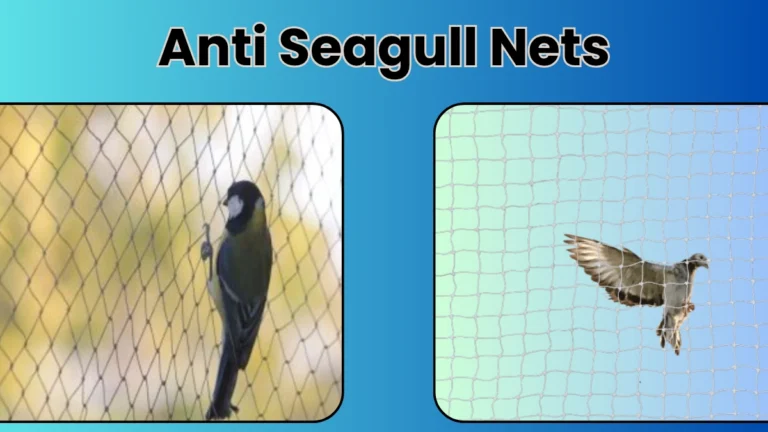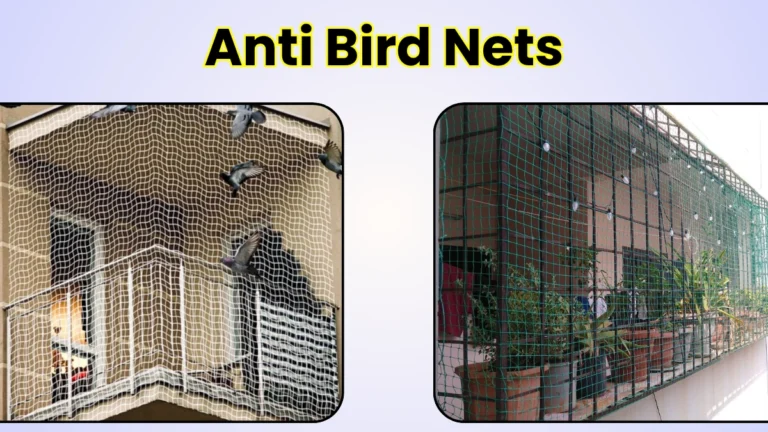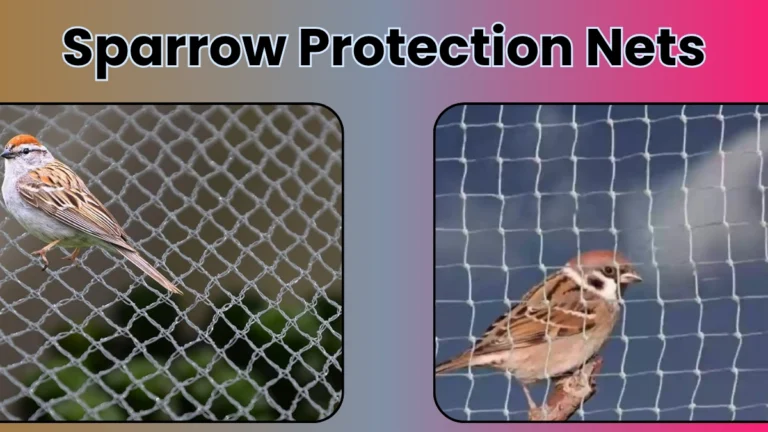
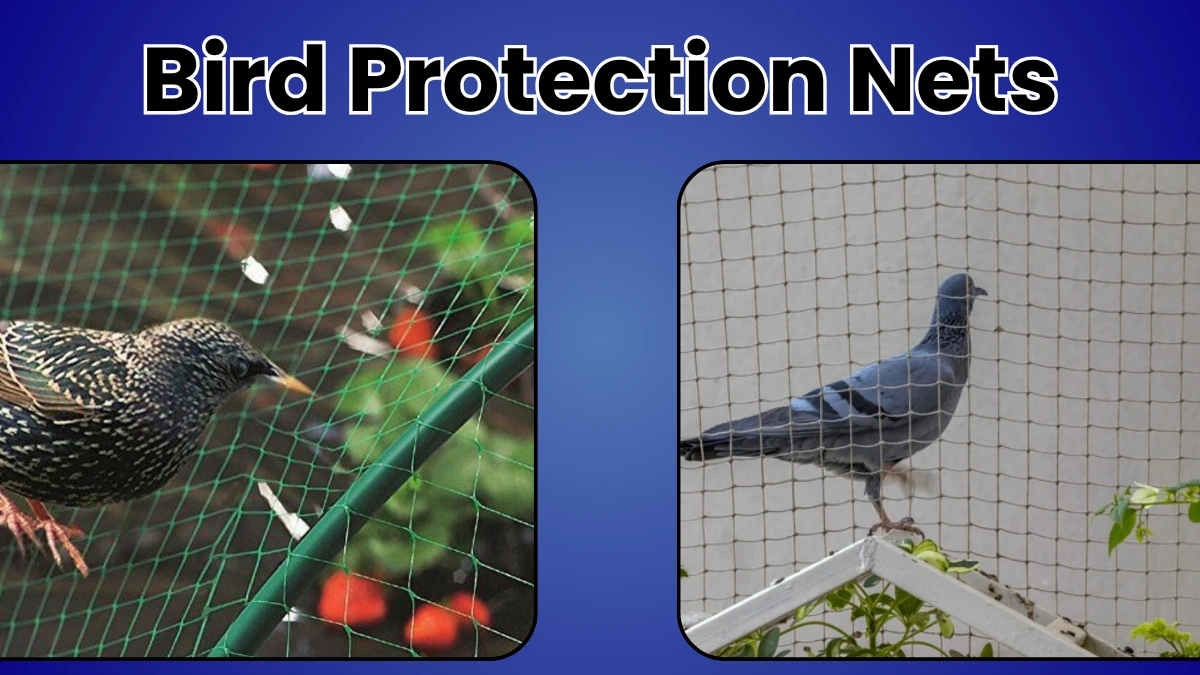

Urban living brings comfort and convenience but also one common problem: birds nesting and perching in open spaces like balconies, terraces, and ducts.
Their droppings, feathers, and nests not only spoil aesthetics but also lead to hygiene and health concerns.
The safest and most effective way to prevent this is by installing Bird Protection Nets — durable, UV-treated nets that block birds while keeping air and light flow intact.
Let’s explore in detail what these nets are, how they work, and why they’re a must for every residential and commercial property.
What Are Bird Protection Nets?
Bird Protection Nets are high-strength mesh barriers made of HDPE (High-Density Polyethylene) or UV-stabilized Nylon.
They are designed to cover open areas like balconies, windows, and terraces to stop birds such as pigeons, crows, and sparrows from entering or nesting.
These nets are transparent, lightweight, and resistant to extreme weather, ensuring long-term protection without affecting visibility or ventilation.
Unlike spikes or chemical repellents, bird nets are 100% safe and humane, simply deterring birds instead of harming them.
Why You Need Bird Protection Nets
Bird infestations can cause multiple hygiene and maintenance problems.
Below is a clear comparison of the common issues and how bird nets help solve them:
| Problem Caused by Birds | Effect on Property / Health | Bird Protection Net Solution |
|---|---|---|
| Pigeon droppings and nests | Damages walls, causes bad odor | Prevents birds from entering balconies and ducts |
| Feathers and dust | Triggers allergies and breathing issues | Keeps open spaces hygienic and dust-free |
| Constant cooing noise | Disturbs peace | Restricts birds from perching |
| Debris and nests blocking AC vents | Reduces air circulation | Covers ducts and vents safely |
| Frequent cleaning | Time-consuming and costly | Low-maintenance protection system |
Installing bird protection nets keeps your environment clean, healthy, and free from unwanted avian activity.
Types of Bird Protection Nets
Different environments require different types of bird nets.
Here’s a comparison table highlighting the main types used in India:
| Type of Bird Net | Material Used | Best For | Durability | Average Cost (per sq.ft.) |
|---|---|---|---|---|
| Nylon Bird Net | UV-treated Nylon | Balconies, windows | 3–5 Years | ₹10–₹15 |
| HDPE Bird Net | High-Density Polyethylene | Terraces, industrial sites | 5–7 Years | ₹12–₹18 |
| Monofilament Bird Net | Transparent Nylon | Modern apartments | 3–4 Years | ₹15–₹20 |
| Pigeon Control Net | Fine HDPE mesh | Pigeon-infested buildings | 4–6 Years | ₹12–₹17 |
| Commercial Bird Net | Heavy-duty HDPE | Warehouses, malls, factories | 6–8 Years | ₹15–₹25 |
Pro Tip: For long-term outdoor applications, go with HDPE nets — they are UV-protected, weatherproof, and require almost no maintenance.
Top Benefits of Installing Bird Protection Nets
1. Clean and Hygienic Environment
No droppings, feathers, or odor. Keeps your balconies and windows clean throughout the year.
2. 100% Bird Deterrence
Effectively prevents pigeons, crows, and sparrows from entering or nesting.
3. Safe and Humane
Unlike spikes or traps, these nets are eco-friendly and bird-safe.
4. Long-Lasting Performance
HDPE and Nylon nets offer 5–8 years of durability, even under harsh weather.
5. Transparent and Neat Design
They are nearly invisible, maintaining the aesthetics of your building.
6. Low Maintenance
Requires cleaning only once every few months — no ongoing effort or cost.
Technical Specifications of Bird Protection Nets
| Feature | Specification | Advantage |
|---|---|---|
| Material Type | HDPE / Nylon (UV-treated) | Strong, flexible, and weather-resistant |
| Mesh Size | 20mm – 50mm | Blocks pigeons and small birds |
| Tensile Strength | 80–120 kg/m² | Withstands heavy wind load |
| UV Protection | Yes | Prevents sunlight damage |
| Color Options | White, Black, Transparent | Blends with architecture |
| Installation Type | Stainless-steel hooks + Nylon rope | Secure and rust-free |
| Average Lifespan | 5–7 Years | Long-term reliability |
| Warranty | 3–5 Years | Guaranteed quality |
Installation Process
Professional installation ensures maximum coverage and safety. Here’s how experts install bird protection nets step by step:
- Area Inspection:
Technicians visit your site to measure and analyze open areas like balconies or terraces. - Material Selection:
Depending on exposure and bird type, Nylon or HDPE mesh with specific thickness is chosen. - Anchor Fixing:
Stainless steel hooks and cables are fixed along corners and edges. - Net Fitting:
The net is tied securely with nylon ropes under proper tension to avoid gaps. - Final Testing:
A quality check ensures stability, alignment, and bird-proof coverage.
✅ Average installation time: 1–3 hours, depending on area size.
Maintenance and Care Tips
- Clean the net using mild soap or water once every few months.
- Check anchor hooks and ropes annually.
- Replace damaged sections immediately for continued protection.
- Avoid cutting or hanging sharp objects near the net.
- Trim nearby trees touching the net.
Following these steps can extend the net’s lifespan to 7–8 years easily.
Bird Protection Nets vs. Other Bird Control Methods
| Bird Control Method | Effectiveness | Durability | Maintenance | Eco-Friendly | Cost |
|---|---|---|---|---|---|
| Chemical Repellents | Low | 2–3 Months | High | ❌ No | Medium |
| Ultrasonic Devices | Moderate | 6–12 Months | Medium | ✅ Yes | High |
| Bird Spikes | High | 5–8 Years | Low | ✅ Yes | Medium |
| Bird Protection Nets | Very High (95–100%) | 5–7 Years | Low | ✅ Yes | Low |
✅ Conclusion: Bird nets are the most practical, durable, and eco-friendly solution for long-term pigeon control.
Where Can Bird Protection Nets Be Installed?
Bird nets can be used almost anywhere, including:
- Residential Areas: Balconies, windows, terraces
- Commercial Buildings: Malls, hotels, hospitals, schools
- Industrial Sites: Factories, warehouses, godowns
- Public Spaces: Parking lots, stadiums, and railway stations
- Agricultural Areas: Farms and storage units for grains
Custom installations are available for both small and large structures.
Common Myths About Bird Protection Nets
Myth 1: “Bird nets trap or injure birds.”
➡ Fact: The nets act only as barriers; they don’t harm birds.
Myth 2: “They block sunlight and air.”
➡ Fact: The mesh is open-weave, allowing full airflow and daylight.
Myth 3: “They ruin the building’s look.”
➡ Fact: Transparent and fine nets blend seamlessly with modern architecture.
Myth 4: “They are expensive to install.”
➡ Fact: Cost starts at ₹10–₹25 per sq.ft., making it very affordable.
Frequently Asked Questions (FAQs)
Q1. Are bird protection nets safe for birds?
Yes, they are fully humane and simply prevent access to nesting areas.
Q2. How long do these nets last?
High-quality HDPE nets can last 5–8 years depending on maintenance.
Q3. Can bird nets be installed in high-rise buildings?
Absolutely. They are lightweight, safe, and ideal for all building types.
Q4. Do bird nets affect ventilation or light?
No, the design allows complete air and light flow.
Q5. What is the installation cost in India?
Typically between ₹10–₹25 per sq.ft., depending on material and area size.
Conclusion: Installing Bird Protection Nets is the most efficient way to keep your surroundings clean, hygienic, and bird-free.
They prevent pigeons and other birds from nesting, damaging property, or spreading diseases — all while maintaining airflow and aesthetics.
Made from UV-treated nylon or HDPE, these nets are strong, transparent, and weather-resistant — ideal for Indian conditions.
Whether for residential, commercial, or industrial use, bird protection nets are a long-term, eco-friendly, and cost-effective safety investment.
Always choose professional installation to ensure correct fitting, durability, and complete bird protection.
Description: Find the best bird protection nets in India. Learn about materials, installation, types, and benefits of pigeon protection nets for homes, offices, and industries.