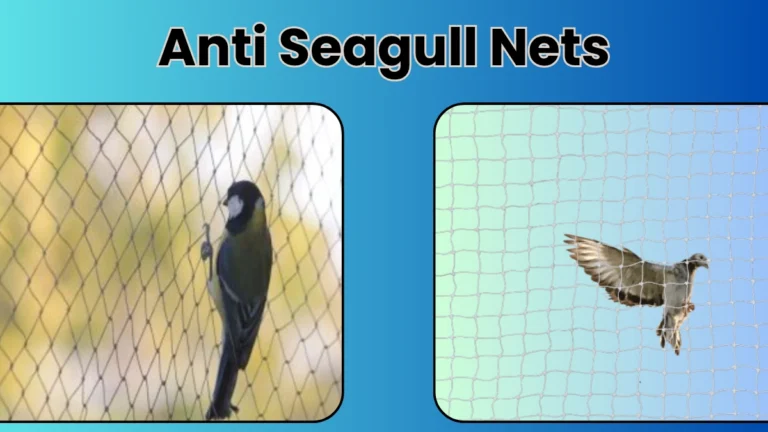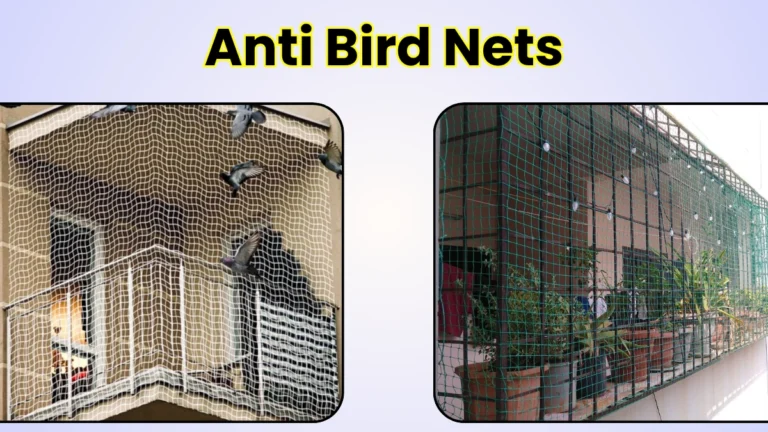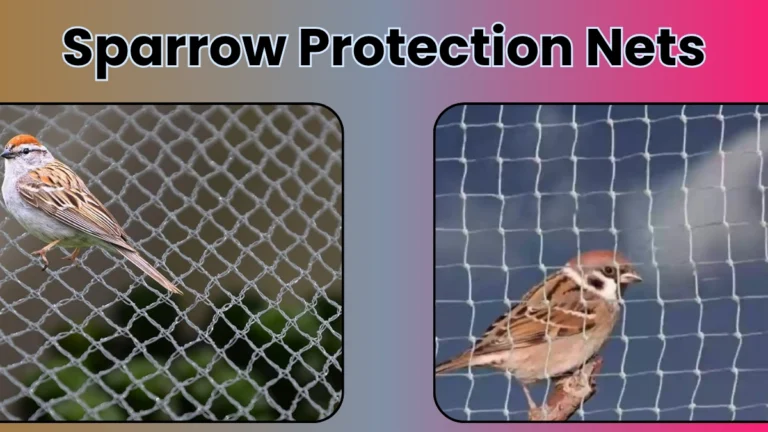

Pigeons may seem harmless, but when they start nesting in balconies, air conditioners, and open ducts, they create serious hygiene and property problems. Their droppings stain walls, clog drainage systems, and spread diseases.
The most practical and eco-friendly solution is Pigeon Nets Installation a reliable and long-lasting method to keep birds away without harming them. This guide explains the full process, cost, materials, and benefits of installing pigeon safety nets for homes, apartments, and commercial spaces.
What Is Pigeon Nets Installation?
Pigeon nets installation involves fixing a specially designed nylon or HDPE (High-Density Polyethylene) bird protection net across open spaces such as balconies, terraces, and windows.
The net creates a physical barrier that prevents pigeons from entering or nesting, while allowing air and light to pass through freely.
These nets are:
- Lightweight yet durable
- UV-stabilized for outdoor protection
- Transparent and aesthetically pleasing
- Completely non-toxic and bird-friendly
Professional installation ensures the net remains tight, secure, and effective for years.
Why You Should Install Pigeon Nets
Pigeons cause more than just inconvenience they lead to health, hygiene, and maintenance issues.
Here’s why pigeon nets installation has become a necessity for modern buildings:
| Problem Caused by Pigeons | How Pigeon Nets Help |
|---|---|
| Bird droppings corrode paint and metal | Nets prevent birds from entering open spaces |
| Nests block drains and AC ducts | Creates a barrier without blocking air |
| Bird feathers spread infections | Keeps area clean and germ-free |
| Constant cooing causes noise disturbance | Prevents pigeons from resting or nesting |
| Daily cleaning becomes expensive | One-time solution, no recurring effort |
Result: A clean, safe, and pigeon-free living or working space.
Types of Pigeon Nets Used for Installation
Different areas and building types require specific pigeon net materials. The following table compares the most common varieties:
| Type of Net | Material | Ideal For | Durability | Average Cost (per sq.ft.) |
|---|---|---|---|---|
| Nylon Pigeon Net | UV-Treated Nylon | Residential Balconies, Windows | 3–5 Years | ₹10–₹15 |
| HDPE Pigeon Net | High-Density Polyethylene | Commercial and Industrial Areas | 4–6 Years | ₹12–₹18 |
| Transparent Monofilament Net | Nylon Monofilament | Premium Apartments | 3–4 Years | ₹15–₹20 |
| Black UV Coated Net | HDPE + UV Layer | Dusty Outdoor Environments | 5–6 Years | ₹14–₹19 |
| Heavy-Duty Custom Net | Nylon / HDPE Thick Mesh | Factories and Open Shafts | 5+ Years | ₹15–₹25 |
Tip: For residential balconies, transparent or white nylon nets are preferred due to their near-invisible appearance.
Advantages of Pigeon Nets Installation
1. 100% Bird Control
The tightly woven mesh prevents pigeons and other birds from nesting or perching in open spaces.
2. Long-Term Durability
Made from UV-protected materials, the nets resist heat, rain, and wind, ensuring long service life.
3. Safe and Humane
The installation offers a non-lethal bird control solution, keeping birds away without hurting them.
4. Maintains Natural Light and Airflow
Transparent nets allow natural ventilation and sunlight, keeping your space airy and bright.
5. Cost-Effective
A one-time installation saves frequent cleaning and maintenance costs for years.
Technical Specifications of Pigeon Safety Nets
| Feature | Specification | Benefit |
|---|---|---|
| Material Type | Nylon / HDPE (UV-Stabilized) | Strength and flexibility |
| Mesh Size | 25mm – 50mm | Blocks pigeons, allows airflow |
| Tensile Strength | 80–120 kg/m² | Resists tearing under load |
| UV Resistance | Yes | Prevents damage from sunlight |
| Color Options | Transparent, White, Black | Blends with any structure |
| Warranty | 3–5 Years | Long-term product reliability |
| Installation Method | Stainless Steel Hooks & Nylon Ropes | Secure and rust-free fixing |
Step-by-Step Process of Pigeon Nets Installation
Professional pigeon net installation ensures precision, stability, and long-term performance.
Step 1: Site Assessment
Technicians visit your property to measure the area and evaluate the structure for fixing points.
Step 2: Material Selection
Based on exposure to weather and bird activity, suitable net type and mesh thickness are chosen.
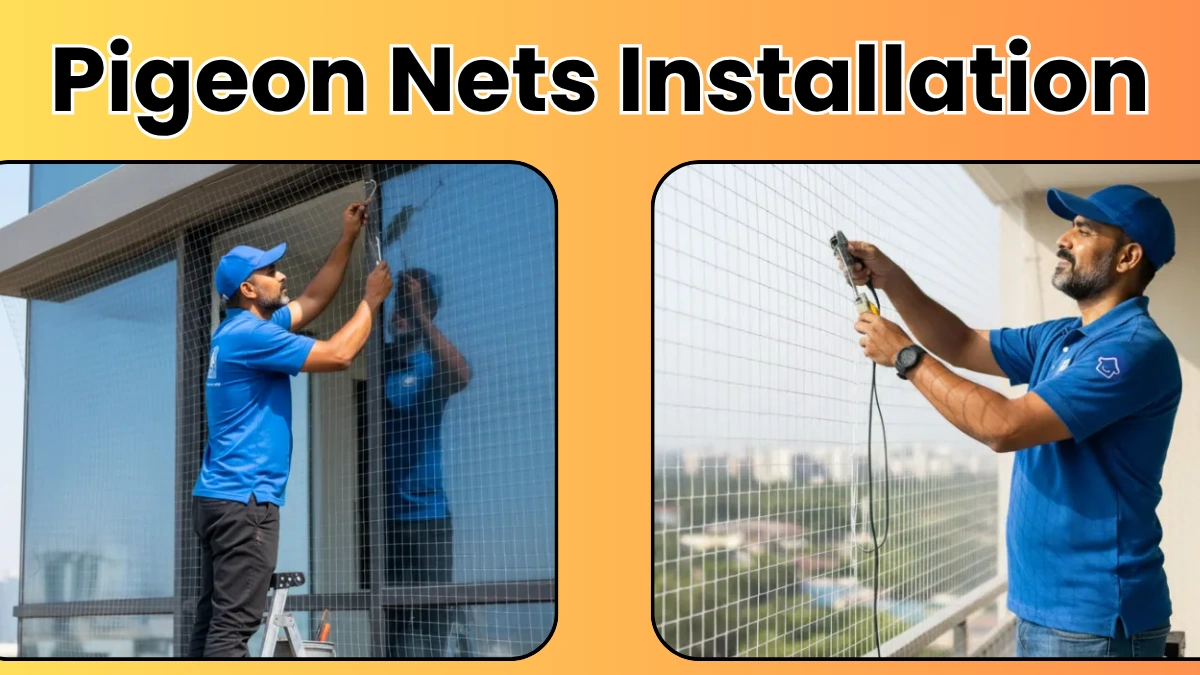
Step 3: Anchor Setup
Stainless steel hooks and anchor fasteners are installed along balcony edges or duct corners.
Step 4: Net Fixing and Tensioning
The net is tied with nylon ropes, stretched evenly, and checked for alignment to ensure no loose ends.
Step 5: Inspection and Testing
The installation is tested for firmness and aesthetic finishing before handover.
A standard balcony pigeon nets installation takes 1–2 hours depending on area size.
Maintenance and Care Tips
To maintain the net’s durability and performance:
- Clean every 3–4 months using water or mild soap
- Check hooks annually for rust or looseness
- Avoid sharp tools near the net
- Replace any torn or sagging parts immediately
- Trim plants or branches rubbing against the net
Regular cleaning enhances appearance and extends net life beyond 5 years.
Pigeon Nets Installation vs Other Bird Control Methods
| Method | Effectiveness | Lifespan | Eco-Friendly | Maintenance | Cost Level |
|---|---|---|---|---|---|
| Chemical Sprays | Low | 2–3 Months | ❌ No | High | Medium |
| Bird Spikes | Moderate | 2–3 Years | ✅ Yes | Medium | Medium |
| Sound Repellers | Low | 6–12 Months | ✅ Yes | Medium | High |
| Pigeon Nets Installation | High (100%) | 3–5 Years | ✅ Yes | Low | Low |
Conclusion:
Pigeon nets offer the most practical, affordable, and long-lasting bird control solution for urban spaces.
Applications of Pigeon Nets Installation
Pigeon nets can be installed in a variety of spaces for complete protection:
- Residential Buildings: Balconies, windows, and terraces
- Commercial Buildings: Hotels, hospitals, schools, and offices
- Industrial Spaces: Warehouses, factories, and sheds
- Public Areas: Airports, stations, malls, and stadiums
- Open Ducts and Ventilation Areas: Prevent pigeon nesting and blockage
They can be customized for any structure, shape, or size.
Common Myths About Pigeon Nets Installation
Myth 1: “Pigeon nets hurt birds.”
➡ Fact: The nets are bird-safe and only block entry.
Myth 2: “They reduce light and ventilation.”
➡ Fact: Transparent nets allow complete airflow and sunlight.
Myth 3: “They look ugly on buildings.”
➡ Fact: Properly installed nets are invisible and blend perfectly with exteriors.
Myth 4: “Installation is expensive.”
➡ Fact: Prices start from ₹10 per sq.ft., making it highly affordable.
Frequently Asked Questions (FAQs)
Q1. How much does pigeon net installation cost?
It ranges between ₹10–₹20 per sq.ft., depending on net type and area.
Q2. How long does it take to install pigeon nets?
Typically 1–2 hours for an average-sized balcony.
Q3. Are pigeon nets washable?
Yes, they can be easily cleaned with water and mild detergent.
Q4. How long do these nets last?
Good-quality HDPE or nylon nets last 3–5 years with minimal maintenance.
Q5. Can they be installed on glass or metal?
Yes, professional teams can fix nets on any surface using custom fittings.
Conclusion: Installing pigeon safety nets is the most efficient, durable, and humane way to maintain a pigeon-free and hygienic environment. These nets prevent droppings, nesting, and property damage ensuring your balconies and windows stay clean and safe.
Whether for residential, commercial, or industrial properties, professional pigeon nets installation provides lasting protection at a low cost. It’s a small investment that delivers years of peace of mind and a cleaner living space.
Description: Find everything about pigeon nets installation, including process, benefits, materials, and cost. Learn how to protect your balcony and building from birds with durable nylon and HDPE nets.