
In industrial and construction environments, workplace safety is a top priority. One of the most effective and widely adopted protective solutions today is the Industrial Safety Net. Designed to prevent injuries, property damage, and material loss, these nets are essential for ensuring worker safety and regulatory compliance.
This article provides a complete overview of industrial safety nets including their types, features, benefits, installation process, and average cost in India based on current industry standards and search trends.
What Are Industrial Safety Nets?
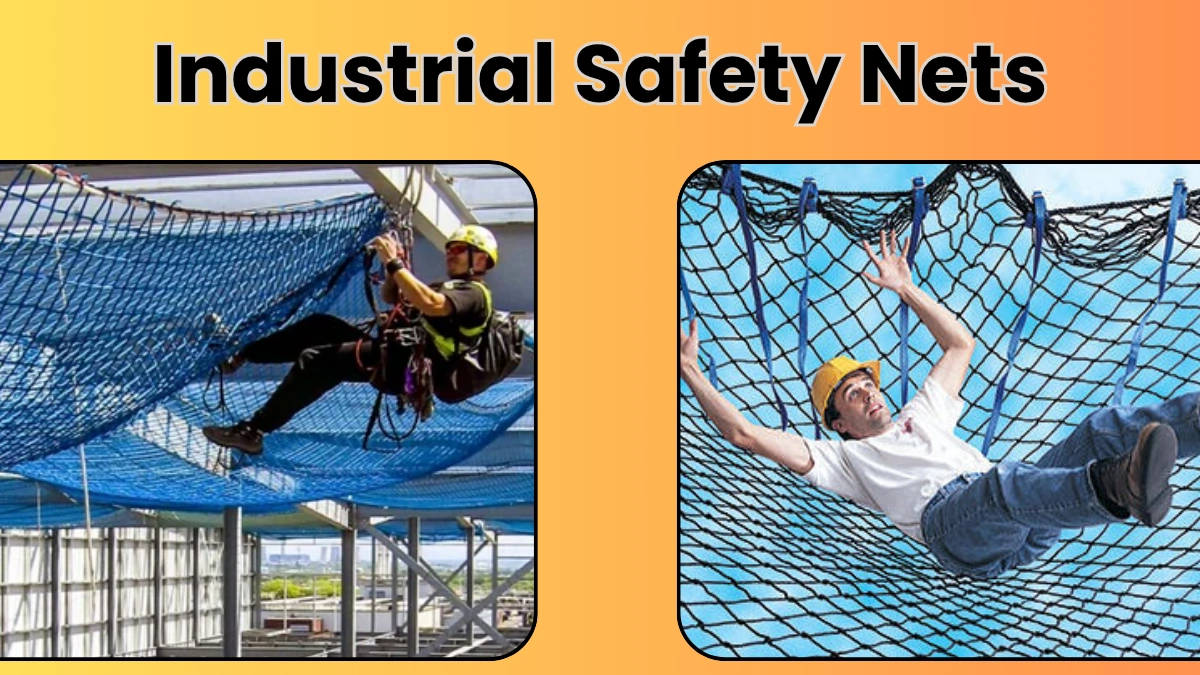
Industrial Safety Nets are high-strength protective nets made from durable materials such as HDPE (High-Density Polyethylene), Nylon, or Polypropylene. These nets serve as fall arrest systems or debris containment barriers in factories, warehouses, power plants, and construction sites.
They are used to catch falling tools, debris, or workers during high-elevation operations, thereby reducing the risk of accidents. The nets are UV-stabilized, weather-resistant, and designed to absorb impact without tearing.
Industrial safety nets can be customized in terms of mesh size, color, and tensile strength, making them suitable for various industrial requirements.
Importance of Industrial Safety Nets in the Workplace
Every industrial site faces potential risks due to falling materials or accidental slips from elevated structures. Safety nets provide a reliable and cost-effective layer of protection that ensures safety for workers, property, and bystanders.
| Hazard Type | Without Safety Nets | With Industrial Safety Nets |
|---|---|---|
| Falling Objects | Risk of serious injury or damage | Prevents objects from reaching the ground |
| Worker Falls | High accident and fatality rate | Minimizes fall impact and saves lives |
| Construction Debris | Clutter and unsafe work zone | Debris safely contained in nets |
| Legal Non-Compliance | Violations and penalties | Meets labor and safety regulations |
| Project Delays | Caused by frequent incidents | Smooth workflow with reduced downtime |
Using industrial safety nets not only prevents injuries but also improves overall productivity by creating a safer, more efficient work environment.
Types of Industrial Safety Nets
Industrial nets are available in multiple types based on application, material, and protective purpose. Choosing the right one ensures maximum efficiency and compliance with workplace safety norms.
| Type of Safety Net | Material | Typical Use | Durability | Cost (per sq.ft.) |
|---|---|---|---|---|
| Fall Protection Nets | HDPE / Nylon | Construction sites, high-rise work | 5–8 Years | ₹15–₹25 |
| Debris Containment Nets | HDPE Mesh | Warehouses, scaffolding, bridges | 4–6 Years | ₹10–₹18 |
| Material Handling Nets | Heavy Nylon | Industrial storage and logistics | 6–8 Years | ₹12–₹20 |
| Fire-Resistant Nets | Treated Nylon | Power plants, chemical factories | 5–7 Years | ₹18–₹30 |
| Custom-Built Safety Nets | Polypropylene / HDPE | Site-specific solutions | 5–9 Years | ₹15–₹28 |
HDPE and Nylon nets are the most common choices due to their superior strength, UV resistance, and affordability.
Key Benefits of Industrial Safety Nets
- Worker Protection: Prevents falls from heights, ensuring worker safety in hazardous areas.
- Property and Material Safety: Protects machines, tools, and vehicles from falling debris.
- Legal Compliance: Helps organizations meet safety standards set by Indian labor and industrial laws.
- Improved Productivity: Reduces accidents, which leads to better morale and efficiency among workers.
- Weather Resistance: UV-treated and waterproof materials ensure durability in all climates.
- Low Maintenance: Requires only occasional inspections and cleaning for long-term performance.
- Cost Efficiency: A one-time investment that provides years of safety assurance.
Industrial safety nets deliver reliable performance and are an integral part of every modern safety management system.
Technical Specifications
| Parameter | Description | Advantage |
|---|---|---|
| Material Composition | HDPE / Nylon / Polypropylene | Lightweight yet high tensile strength |
| Mesh Size | 25 mm to 100 mm | Adjustable for different applications |
| UV Stabilization | Yes | Resists damage from sunlight |
| Load Capacity | Up to 500 kg/m² | Suitable for heavy-duty operations |
| Tensile Strength | 80–200 kg/m² | Absorbs strong impacts effectively |
| Fire Resistance | Optional | Ideal for chemical and thermal sites |
| Lifespan | 5–8 Years | Long-term industrial use |
| Color Options | Green, Yellow, Black | Enhances visibility and safety |
All nets are tested for quality assurance and compliance with IS 11057:1984 (Indian Safety Standards) or equivalent international standards.
Industrial Safety Net Installation Process
A proper installation ensures that the safety net functions efficiently under real working conditions. The process includes:
- Site Survey and Risk Assessment: Experts evaluate the structure, height, and work zone to determine the correct net type.
- Accurate Measurement: Area dimensions are taken to ensure the net fits securely across the space.
- Material Selection: Appropriate mesh and thickness are chosen based on site conditions and load requirements.
- Anchor Fixing: Stainless steel hooks, bolts, or clamps are installed at secure points.
- Net Installation: The net is stretched and tightened with nylon ropes or cables to provide full coverage.
- Testing and Certification: The installed net is checked for tension, alignment, and strength before approval.
Professional installation ensures reliability, compliance, and long-term stability of the safety system.
Maintenance and Inspection Guidelines
Industrial safety nets require minimal maintenance but must be checked regularly for wear and tear to ensure ongoing protection.
- Clean nets periodically to remove accumulated dust or debris.
- Inspect anchors, ropes, and mesh for any signs of damage every 3–6 months.
- Replace worn or frayed sections immediately.
- Avoid exposure to corrosive chemicals or sharp edges.
- Store unused nets in a dry, shaded area away from direct sunlight.
Following these guidelines ensures extended service life and consistent safety standards.
Applications of Industrial Safety Nets
Industrial safety nets are widely used across different sectors, including:
- Construction and High-Rise Projects: Fall protection for workers and falling debris control.
- Warehouses and Factories: Material handling safety and storage area protection.
- Power Plants and Chemical Units: Fire-resistant nets for maintenance areas.
- Shipyards, Ports, and Airports: Worker safety during structural inspections and repairs.
- Bridges and Infrastructure Projects: Secure containment during heavy lifting or repair works.
These nets are essential wherever there is a risk of falling from height or accidental material drop.
Comparison: Industrial Safety Nets vs Traditional Barriers
| Feature | Industrial Safety Nets | Traditional Railings / Barriers |
|---|---|---|
| Flexibility | Covers large areas easily | Limited area coverage |
| Weight Capacity | High | Moderate |
| Cost | Affordable | Expensive |
| Installation | Quick and easy | Time-consuming |
| Mobility | Can be reused at multiple sites | Fixed in one location |
| Maintenance | Low | High |
Industrial safety nets are preferred due to their adaptability, cost efficiency, and full-coverage protection.
Cost and Pricing Factors
The cost of industrial safety nets in India depends on material, installation area, and project type.
Average price range: ₹10 to ₹30 per square foot including installation.
Price factors include:
- Type of net (HDPE, Nylon, or Polypropylene)
- Mesh density and tensile strength
- UV and fire-resistant coatings
- Height and accessibility of the installation area
Bulk orders and long-term contracts generally reduce the per-square-foot cost.
Conclusion: Industrial Safety Nets are an essential safety component in every industrial and construction setting. They prevent accidents, protect property, and ensure regulatory compliance. Made from high-grade HDPE or Nylon, these nets offer strength, flexibility, and long-term durability under all weather conditions.
By investing in professionally installed safety nets, companies not only safeguard their workforce but also build a safer and more efficient workplace. Regular maintenance, quality materials, and compliance with safety standards make these nets a long-term solution for modern industries.
Description: Learn about industrial safety nets, their types, materials, and installation process. Discover the benefits, applications, and pricing of industrial safety nets for construction and factory sites in India.