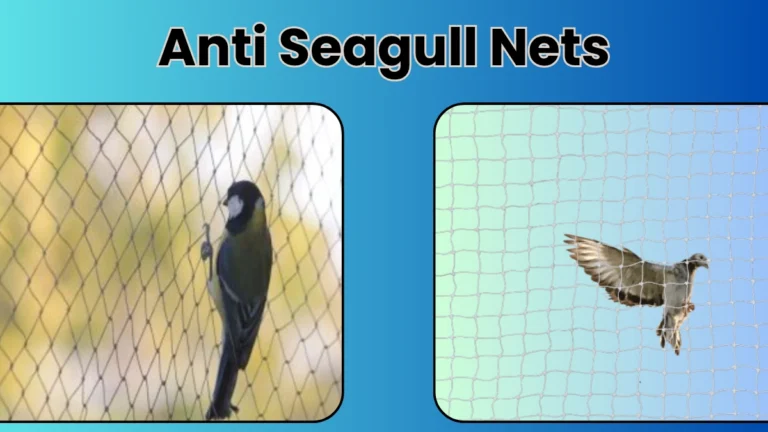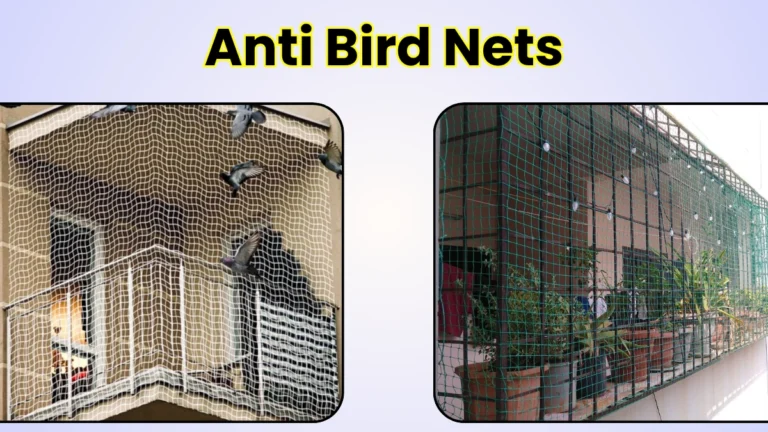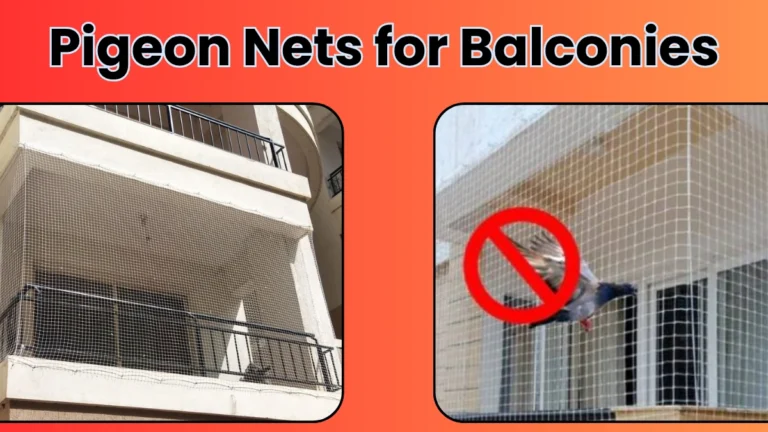
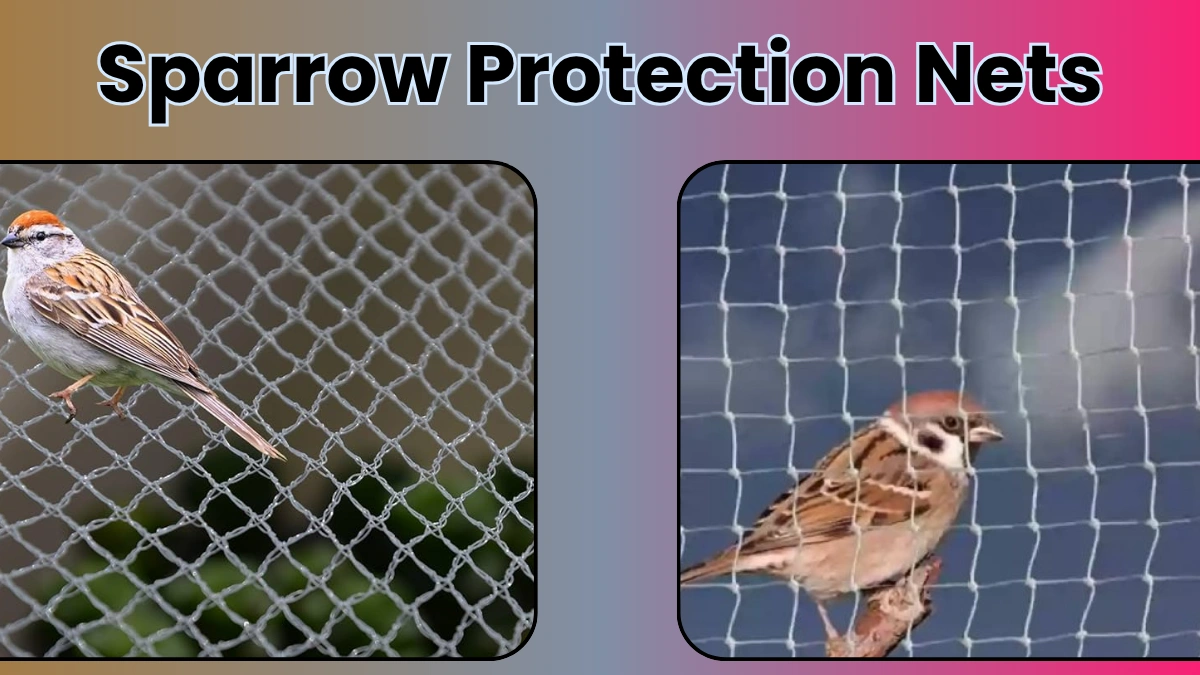

In cities and high-rise buildings, small birds such as sparrows often enter open balconies, ventilation ducts, and rooftops to build nests. While sparrows seem harmless, their nesting activity can cause hygiene problems, block air circulation, and lead to constant maintenance. The most effective and environment-friendly solution is to install Sparrow Protection Nets.
These nets prevent birds from entering open areas while maintaining light, air circulation, and building aesthetics. This article explains everything about sparrow protection nets, including materials, benefits, installation, and pricing in India.
What Are Sparrow Protection Nets
Sparrow Protection Nets are fine-mesh safety nets made from HDPE (High-Density Polyethylene) or UV-stabilized Nylon. They are installed in balconies, terraces, ducts, and open spaces to prevent sparrows and small birds from nesting.
These nets are transparent, weather-resistant, and long-lasting. They act as a physical barrier that blocks birds without affecting ventilation or sunlight. Commonly used in apartments, factories, and commercial buildings, sparrow protection nets help maintain a cleaner and healthier environment.
Why You Need Sparrow Protection Nets
Sparrows often nest in small openings and balcony corners, which leads to hygiene and maintenance problems. Installing sparrow nets eliminates these issues and keeps the area bird-free.
| Problem | Impact Without Nets | How Nets Help |
|---|---|---|
| Nesting in balconies and ducts | Causes foul smell and dirt | Prevents sparrows from nesting |
| Bird droppings on walls | Damages paint and creates stains | Keeps walls clean |
| Noise from sparrows | Disturbs peace and comfort | Keeps birds out of living areas |
| Feathers and dust | Triggers allergies and infections | Maintains hygiene |
| Regular cleaning required | Increases maintenance cost | Minimizes cleaning efforts |
These nets create a safe barrier that prevents entry of birds without harming them or affecting natural ventilation.
Types of Sparrow Protection Nets
Sparrow nets come in various materials, mesh sizes, and thickness levels depending on the installation area and purpose. Below is a detailed comparison of the most commonly used types.
| Type | Material | Suitable For | Durability | Average Cost (per sq.ft.) |
|---|---|---|---|---|
| Nylon Sparrow Net | UV-Stabilized Nylon | Balconies, windows | 3–5 Years | ₹10–₹15 |
| HDPE Sparrow Net | High-Density Polyethylene | Commercial and industrial buildings | 5–7 Years | ₹12–₹18 |
| Transparent Monofilament Net | Nylon Fiber | Apartments, glass façades | 3–4 Years | ₹15–₹20 |
| Fine Mesh Bird Net | Fine HDPE | AC units, ducts, roof openings | 4–6 Years | ₹12–₹17 |
| Reinforced Heavy-Duty Net | Double-Layer HDPE | Warehouses, large open areas | 6–8 Years | ₹15–₹25 |
HDPE sparrow nets are the most popular because of their high strength, UV protection, and resistance to sunlight and rain.
Benefits of Installing Sparrow Protection Nets
Prevents Bird Entry and Nesting
Blocks sparrows and small birds from nesting in balconies, ducts, and roofs, ensuring a clean and healthy space.
Maintains Hygiene and Cleanliness
Reduces bird droppings, feathers, and dust accumulation, keeping surfaces clean and odor-free.
Safe and Eco-Friendly
The nets are harmless and designed only to deter birds, complying with environmental and animal safety standards.
Durable and Weather Resistant
UV-treated nylon and HDPE materials ensure long-lasting protection under all weather conditions.
Allows Natural Light and Airflow
Fine mesh structure ensures ventilation and daylight without obstruction.
Cost-Effective and Low Maintenance
Installation is affordable and requires very little upkeep after fitting.
Technical Specifications
| Feature | Specification | Benefit |
|---|---|---|
| Material | HDPE / Nylon (UV Stabilized) | High strength and flexibility |
| Mesh Size | 15mm – 25mm | Blocks sparrows and small birds |
| Tensile Strength | 80–120 kg/m² | Withstands strong winds |
| UV Protection | Yes | Resistant to sunlight and weather |
| Installation | Stainless Steel Hooks + Nylon Rope | Secure and rust-free |
| Color Options | Transparent, White, Green | Matches with building exteriors |
| Lifespan | 5–8 Years | Long-term use |
| Maintenance | Very Low | Easy to clean and inspect |
Installation Process
Professional installation ensures durability and safety. The process includes the following steps:
- Inspection and Measurement – Technicians inspect the open area and measure accurately.
- Material Selection – The suitable mesh type and thickness are chosen based on exposure and bird activity.
- Hook Installation – Stainless-steel hooks are fixed securely around the perimeter.
- Net Fitting – The net is tied tightly using nylon cords for complete coverage.
- Quality Check – The final step involves checking alignment, tightness, and overall protection.
Average installation time ranges between one and three hours depending on the area size.
Maintenance and Care
To ensure long-lasting performance of sparrow protection nets:
- Wash occasionally with mild soap and water.
- Inspect anchors and ropes annually.
- Replace damaged sections immediately.
- Avoid hanging heavy items on the net.
- Trim trees or plants near the installation area.
With minimal maintenance, high-quality sparrow nets can last for up to eight years.
Sparrow Protection Nets vs Other Bird Control Methods
| Method | Effectiveness | Durability | Maintenance | Eco-Friendly | Cost |
|---|---|---|---|---|---|
| Chemical Repellents | Low | 2–3 Months | High | No | Moderate |
| Bird Spikes | High | 5–8 Years | Low | Yes | Medium |
| Ultrasonic Devices | Moderate | 6–12 Months | Medium | Yes | High |
| Sparrow Protection Nets | Very High (95–100%) | 5–8 Years | Low | Yes | Low |
Sparrow nets are considered the most efficient and affordable long-term solution for residential and commercial bird prevention.
Applications of Sparrow Protection Nets
Sparrow nets are versatile and suitable for multiple applications such as:
- Apartment balconies and windows
- Duct areas and ventilation shafts
- Industrial units and warehouses
- Hospitals and schools
- Terraces, AC units, and glass façades
They can be customized to fit different shapes and sizes, ensuring total coverage without affecting building design.
Common Myths About Sparrow Nets
Myth 1: Sparrow nets block light and air.
Fact: The fine mesh allows free airflow and natural light.
Myth 2: Installing nets is costly.
Fact: The cost starts from ₹10 per sq.ft. and is a one-time investment.
Myth 3: Nets spoil the appearance of the building.
Fact: Transparent nets are nearly invisible and blend with the structure.
Myth 4: Nets harm birds.
Fact: They only restrict entry and do not injure or trap birds.
Frequently Asked Questions
1. Are sparrow nets safe for birds?
Yes. They are made to prevent bird entry safely without harm.
2. How long do these nets last?
High-quality HDPE nets can last between five and eight years.
3. Can they be installed on ducts or open terraces?
Yes, they are suitable for balconies, terraces, ducts, and roof openings.
4. Do they block airflow?
No. The nets are breathable and do not affect ventilation.
5. What is the installation cost in India?
The cost varies from ₹10 to ₹25 per sq.ft. depending on material and location.
Conclusion: Sparrow Protection Nets are an essential solution for maintaining a clean, safe, and bird-free environment. They effectively prevent sparrows from nesting in open spaces while maintaining airflow and aesthetics.
Made from UV-stabilized nylon or HDPE, these nets are strong, weather-resistant, and long-lasting. Suitable for both residential and commercial spaces, they are easy to install, cost-effective, and require minimal upkeep.
By choosing professional installation, you can ensure complete protection for your balconies, ducts, and building exteriors keeping your surroundings cleaner and safer for years.
Description: Find out everything about sparrow protection nets for apartments, ducts, and terraces. Learn about HDPE and nylon bird nets, installation process, benefits, and prices in India.